
Planning your adventure to India can feel overwhelming given the country’s incredible diversity and sheer size. This comprehensive India travel guide is designed for first-time visitors and seasoned travelers who want to make the most of their journey through one of the world’s most captivating destinations in Asia.
You’ll discover everything from essential pre-travel planning and cultural insights to navigating India’s transportation systems and finding accommodations that fit your budget. We’ll walk you through the must-visit destinations across different regions, share practical India travel tips for staying safe and healthy, and break down realistic costs so you can plan your India travel budget effectively.
Whether you have two weeks or two months, this guide covers the key information you need to create an unforgettable India travel itinerary that matches your interests and timeline.
Essential Pre-Travel Planning Information
Visa Requirements and E-Visa Application Process
Your journey to India begins long before you step foot in this incredible country – it starts with securing the proper visa documentation. Understanding India’s visa requirements is crucial for ensuring your travel plans proceed smoothly without any last-minute complications.
For most international travelers, India requires a valid visa for entry, regardless of your nationality or purpose of visit. The good news is that India has significantly streamlined its visa application process through the introduction of the e-Visa system, making it more accessible and convenient than ever before.
Understanding E-Visa Categories
India offers several e-Visa categories to accommodate different types of travelers. The most common options you’ll encounter include:
Tourist e-Visa: This is your primary option for leisure travel, sightseeing, and visiting friends or family. Tourist e-Visas are available in multiple durations – 30 days, 1 year, and 5 years – with varying entry permissions. The 30-day e-Visa allows for double entry, while the longer-duration visas permit multiple entries.
Business e-Visa: If you’re traveling for business meetings, conferences, or exploring commercial opportunities, this category serves your needs. Business e-Visas typically offer longer validity periods and multiple entry options.
Medical e-Visa: Designed for those seeking medical treatment in India, this visa category includes provisions for accompanying attendants and typically allows for triple entry during its validity period.
The E-Visa Application Process
Applying for your Indian e-Visa is a straightforward online process that you can complete from the comfort of your home. Here’s what you need to know about navigating this system effectively:
Required Documentation: Before beginning your application, ensure you have all necessary documents ready. You’ll need a passport with at least six months of validity remaining and two blank pages for immigration stamps. Additionally, prepare a recent passport-sized photograph with specific requirements – it must be a color photo taken against a white background, and your face should occupy 60-70% of the frame.
Online Application Steps: Visit the official Indian e-Visa website and select the appropriate visa category for your travel purpose. Fill out the application form completely and accurately – any discrepancies can lead to delays or rejection. Upload your passport’s biographical page and your photograph according to the specified technical requirements.
Processing Time and Fees: Generally, e-Visa processing takes 3-5 business days, though it’s advisable to apply at least a week before your intended travel date to account for any potential delays. Fees vary based on your nationality and the type of visa you’re applying for, so check the current fee structure during your application process.
Important Visa Considerations
Several critical factors can impact your visa application success. Your passport must have adequate validity – Indian immigration requires at least six months remaining from your date of entry. Additionally, ensure your passport has sufficient blank pages, as immigration officials need space for entry and exit stamps.
When completing your application, accuracy is paramount. Any inconsistencies between your application information and supporting documents can result in visa rejection. Double-check all dates, names, and personal information before submission.
Entry Points: E-Visas are valid for entry through designated airports and seaports only. Major international airports like Delhi, Mumbai, Chennai, Kolkata, and Bangalore accept e-Visa holders, but land border crossings typically do not. Verify that your planned entry point accepts e-Visa travelers before finalizing your travel arrangements.
Best Time to Visit Based on Weather and Seasons
India’s vast geographical expanse creates diverse climatic conditions across different regions, making timing crucial for an optimal travel experience. Understanding these seasonal patterns will help you plan your itinerary around the most favorable weather conditions for your preferred activities and destinations.
Understanding India’s Three Primary Seasons
India experiences three distinct seasons, each offering unique advantages and challenges for travelers:
Winter Season (October to March): This period represents the golden window for most travelers visiting India. The weather during these months is generally pleasant, with comfortable temperatures, minimal rainfall, and clear skies. This is when you’ll find the most favorable conditions for sightseeing, outdoor activities, and exploring India’s iconic destinations.
During winter months, northern India experiences cool, dry weather that’s perfect for visiting the Golden Triangle circuit of Delhi, Agra, and Jaipur. The reference content mentions experiencing pleasant morning temperatures and comfortable conditions for exploring outdoor attractions like Humayun’s Tomb and the Taj Mahal during sunrise visits.
Summer Season (April to June): The pre-monsoon period brings intense heat across much of India, with temperatures often soaring above 40°C (104°F) in northern plains. While challenging for many travelers, this season offers certain advantages, including fewer crowds at popular tourist sites and potentially lower accommodation rates.
Monsoon Season (July to September): The arrival of monsoons brings relief from the summer heat but introduces new considerations for travelers. Heavy rainfall can affect transportation, outdoor sightseeing, and some activities, though it also transforms the landscape into lush, green vistas.
Regional Climate Variations
India’s climate varies significantly by region, and understanding these differences helps you optimize your travel timing:
Northern India: The reference content provides insights into traveling through northern India during cooler months. Cities like Delhi, Agra, and Jaipur experience their most pleasant weather from October through March. During this period, you’ll enjoy comfortable temperatures for exploring outdoor attractions, taking early morning tours of the Taj Mahal, and participating in cultural activities.
Rajasthan: This desert state experiences extreme temperature variations between seasons. Winter months offer the most comfortable conditions for exploring Jaipur’s palaces, markets, and outdoor attractions. The reference content mentions visiting flower markets and participating in outdoor cultural activities during what appears to be the cooler season.
Central India: Regions like those around Ranthambhore National Park experience similar seasonal patterns to northern India, with winter months providing optimal conditions for wildlife viewing and outdoor activities.
Seasonal Activity Considerations
Your choice of travel timing should align with your planned activities and interests:
Wildlife Viewing: For wildlife enthusiasts planning visits to national parks like Ranthambhore, the cooler months offer the best game viewing opportunities. The reference content mentions successful tiger sightings during what appears to be the optimal wildlife viewing season, when animals are more active and visible around water sources.
Cultural Festivals: India’s festival calendar spans throughout the year, but many major celebrations occur during the pleasant winter months. This timing allows for comfortable participation in outdoor festivities and cultural events.
Outdoor Sightseeing: Monument visits, walking tours, and outdoor cultural experiences are most enjoyable during cooler months. The reference content describes comfortable conditions for sunrise visits to the Taj Mahal and extended walking tours through historical sites and markets.
Language Basics and Common Hindi Phrases
While English is widely spoken in tourist areas, hotels, and among educated populations, learning basic Hindi phrases enhances your travel experience and helps you connect more meaningfully with local people. Hindi serves as India’s primary official language, and even modest efforts to communicate in the local language are often met with appreciation and warmth from Indians you encounter.
Essential Greetings and Courtesies
Starting with fundamental greetings establishes positive interactions wherever you travel in India:
“Namaste” remains the most universally recognized greeting, appropriate for any time of day and suitable for both formal and informal situations. Accompany this greeting with palms pressed together at chest level for the complete traditional gesture.
“Dhanyawad” means “thank you” and proves invaluable throughout your journey. Whether thanking hotel staff, restaurant servers, or helpful locals, expressing gratitude in Hindi creates positive connections.
“Maaf kijiye” translates to “excuse me” or “sorry” and helps navigate crowded spaces, attract attention politely, or apologize for minor inconveniences – situations you’ll encounter frequently while exploring busy Indian cities and attractions.
Practical Communication Phrases
These phrases address common travel situations and needs:
“Kya aap English bolte hain?” means “Do you speak English?” This question helps establish communication preferences early in interactions, particularly useful when engaging with shopkeepers, drivers, or local service providers.
“Kitna paisa?” translates to “How much money?” or “What’s the price?” This essential phrase proves crucial for shopping in markets, negotiating with auto-rickshaw drivers, or understanding costs for various services.
“Paani chahiye” means “I need water” – an essential phrase given India’s climate and the importance of staying hydrated throughout your travels.
Navigation and Transportation
Getting around India requires specific vocabulary for directions and transportation:
“Yeh kahan hai?” means “Where is this?” – useful when showing addresses, maps, or destination names to locals, taxi drivers, or hotel staff.
“Station kahan hai?” translates to “Where is the station?” helping you locate train stations, bus stations, or other transportation hubs.
“Roko” simply means “stop,” essential when traveling by auto-rickshaw, taxi, or other local transportation and need to indicate your destination or request to stop.
Cultural Context and Usage Tips
Understanding when and how to use Hindi phrases appropriately enhances their effectiveness:
Most Indians appreciate foreigners’ efforts to speak Hindi, even imperfectly. Don’t worry about perfect pronunciation – your attempts at communication will generally be met with patience and encouragement.
In major tourist areas, hotels, and restaurants mentioned in the reference content, English communication is typically sufficient. However, using Hindi greetings and courtesies demonstrates cultural respect and often results in warmer interactions and better service.
Regional variations exist throughout India, with different states having their own languages. However, Hindi serves as a common communication bridge across much of northern and central India, including the destinations mentioned in the reference content like Delhi, Agra, and Rajasthan.
Currency, Money Exchange and ATM Usage
Understanding India’s monetary system and managing your finances effectively ensures smooth transactions throughout your journey. India’s currency landscape has evolved significantly, and being prepared with the right knowledge helps you navigate payments, exchanges, and cash management with confidence.
Indian Currency Basics
The Indian Rupee (INR) serves as the official currency, with coins available in denominations of 1, 2, 5, and 10 rupees, while notes come in denominations of 10, 20, 50, 100, 200, 500, and 2000 rupees. Familiarizing yourself with these denominations helps you handle transactions more efficiently and avoid confusion during payments.
Modern India increasingly embraces digital payments, though cash remains essential for many transactions, particularly with street vendors, small restaurants, auto-rickshaws, and local markets. The reference content mentions various shopping experiences and local market visits where cash transactions would be necessary.
Money Exchange Options
Several reliable options exist for exchanging foreign currency to Indian rupees:
Airport Exchange Counters: Upon arrival at major airports like those mentioned in the reference content (Delhi’s airport), you’ll find authorized exchange counters offering competitive rates. While convenient, these rates might be slightly less favorable than other options.
Banks and Authorized Money Changers: Major banks and government-authorized money changers typically offer better exchange rates than airports. In cities like Delhi, Mumbai, and other major destinations, these establishments are readily available and provide secure transaction environments.
Hotel Exchange Services: Many upscale hotels, such as The Imperial New Delhi or Oberoi properties mentioned in the reference content, offer currency exchange services for guests. While convenient, rates may be less competitive than banks or authorized changers.
ATM Networks and Usage
India has an extensive ATM network, making cash access convenient throughout your travels:
ATM Availability: Major cities and tourist destinations feature numerous ATMs from various banks. International debit and credit cards with Visa, MasterCard, or other major network logos work at most ATMs across India.
Daily Withdrawal Limits: Most ATMs impose daily withdrawal limits, typically ranging from 10,000 to 40,000 rupees per day, depending on the bank and your card type. Plan accordingly, especially for longer stays or higher-expense days.
Transaction Fees: Be aware that both Indian banks and your home bank may charge fees for international ATM withdrawals. Check with your bank before traveling to understand applicable charges and consider cards that minimize international transaction fees.
Payment Methods and Practical Tips
Credit Card Acceptance: Major hotels, upscale restaurants, and established shops accept credit cards. The reference content mentions stays at luxury hotels like The Imperial, Oberoi properties, and Six Senses, where credit cards are readily accepted.
Cash Requirements: Despite increasing digital adoption, cash remains necessary for many experiences. Street food, local markets, auto-rickshaws, small tips, and entrance fees to some attractions often require cash payments.
Small Denomination Notes: Keep small denomination notes (10, 20, 50 rupees) readily available for tips, small purchases, and situations where vendors cannot provide change for larger notes.
Security Considerations: When using ATMs, choose machines located within bank premises or well-lit, busy areas. Cover your PIN entry and be aware of your surroundings, especially in crowded tourist areas.
Digital Payment Apps: While primarily designed for Indian residents, understanding that many businesses accept digital payments through apps like Paytm or UPI can be helpful, though international visitors typically cannot access these services directly.
Tipping Culture and Small Expenses
Understanding India’s tipping culture helps you budget appropriately and show proper appreciation for services:
Hotel Services: The reference content mentions various luxury hotels where tipping housekeeping staff, bellhops, and concierge services is customary. Generally, 50-100 rupees per service or per day is appropriate.
Restaurants: In upscale restaurants, 10% of the bill is standard if service charge isn’t included. For smaller establishments, rounding up the bill or leaving small change is sufficient.
Drivers and Guides: For day tours or extended services, 200-500 rupees per day is customary, depending on service quality and duration.
General Expenses: Budget for small daily expenses like bottled water, snacks, temple donations, and occasional small purchases. Having 500-1000 rupees in small denominations daily covers these miscellaneous needs comfortably.
Understanding India’s Culture and What to Expect
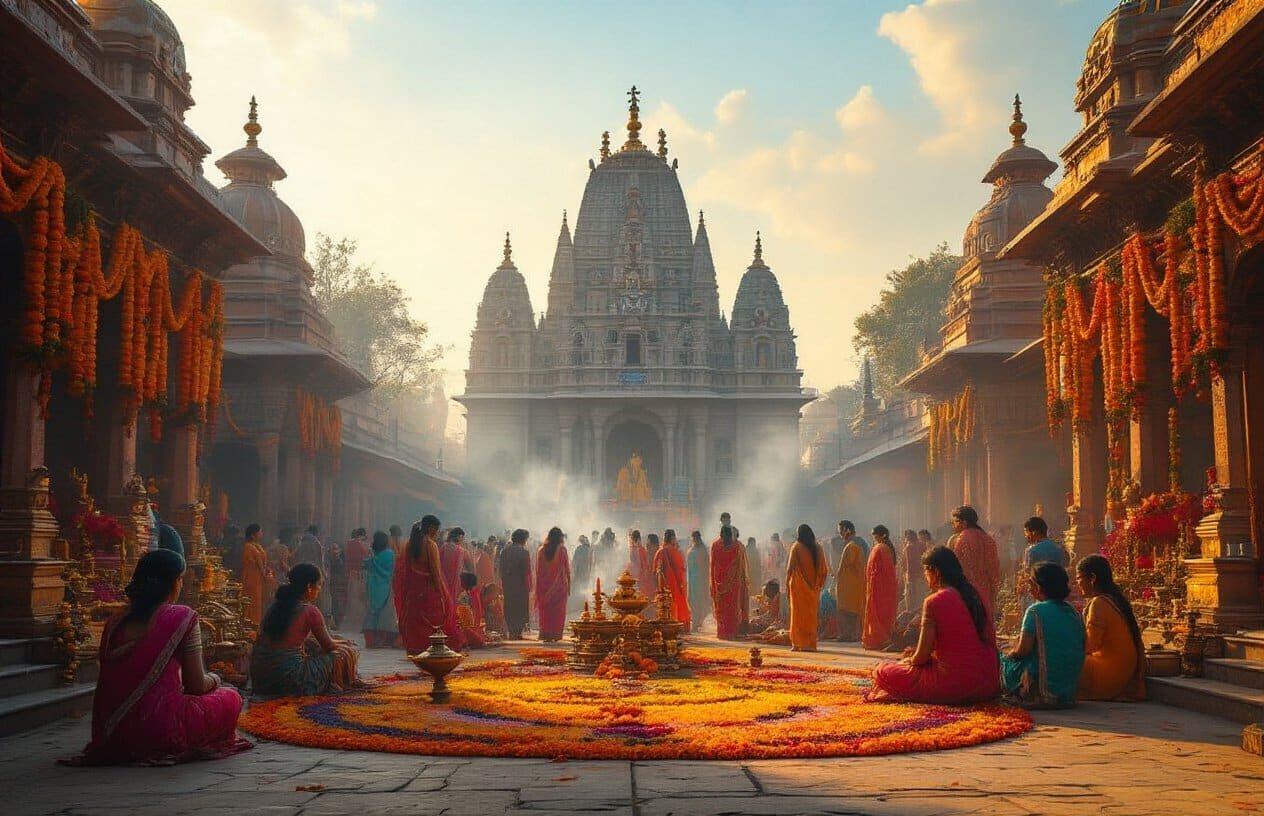
Embracing the Chaos and Managing Expectations
When you first step foot in India, you’ll likely experience what many travelers describe as overwhelming sensory overload. With more than 1.2 billion people calling this vast country home, you’ll encounter a level of activity, noise, and bustling energy that can feel intimidating at first glance. However, understanding what to expect and adjusting your mindset accordingly will transform your perception from “shocking chaos” to “vibrant life.”
Your initial reaction might be to feel overwhelmed by the constant movement, the cacophony of sounds from traffic, street vendors, and everyday life. First-time visitors often describe India using words like intimidating, busy, and shocking – and while these descriptions aren’t entirely inaccurate, they only tell part of the story. When you shift your perspective and embrace the energy rather than resist it, you’ll discover that India is intriguing, colorful, and alive in ways that few other destinations can match.
The key to managing your expectations lies in understanding that everything operates on “Indian time.” If you’re accustomed to punctuality and rigid schedules, you’ll need to practice patience with everything and everyone. Whether you’re trying to catch a train, meet someone for dinner, or simply navigate through crowded streets, chances are you’ll be late or arrive right on time despite leaving early. This isn’t a flaw in the system – it’s simply how life flows in India.
You’ll encounter traffic jams that include not just cars and rickshaws, but also cows, pedestrians, and street vendors. Rather than becoming frustrated, view these moments as opportunities to observe daily life unfolding around you. The apparent chaos actually follows its own rhythm and logic that you’ll begin to appreciate as you spend more time in the country.
Your patience will be tested, but it will also be rewarded. When you roll with the punches and accept that nobody is rushing to get anywhere, you’ll find yourself slowing down and experiencing a different pace of life. This adjustment period is part of what makes India such a transformative travel destination – it teaches you things about yourself and opens your eyes to different ways of living.
Religious Diversity and Cultural Sensitivities
India’s cultural landscape is incredibly diverse, representing a melting pot of religions, traditions, and customs that vary significantly from region to region. The major religion practiced is Hinduism, but you’ll also encounter widespread communities practicing Islam, Christianity, and Buddhism. Each state within India maintains its own unique customs and traditions, making every destination feel distinctly different.
When visiting temples or other religious sites, you’ll need to observe specific etiquette to show proper respect. In many Hindu temples, non-Hindus are not permitted to enter certain parts of the temple complex, so you should always inquire about restrictions before exploring. When you do visit these sacred spaces, remember that photography may be inappropriate, and you should always ask permission before taking pictures of people or religious objects.
Your footwear must be removed before entering temples or someone’s home, as feet and shoes are considered dirty in Indian culture. You should also remove hats when entering these spaces. Dress conservatively to express respect – this means covering your knees, avoiding sleeveless tops, and ensuring your clothing isn’t tight or revealing. Women particularly should avoid low-cut shirts, tank tops, and shorts.
When you receive prasad (typically a small sweet or fruit offering) from a priest at a temple, remember to accept it with your right hand, as the left hand is considered unclean. People often give offerings such as lotus blossoms and coconuts to temple deities, and participating respectfully in these customs will earn you appreciation from locals.
You should never point with your index finger, especially at sacred items or religious paintings. Instead, motion with your chin or extend your hand palm flat and skyward when referencing objects. This gesture shows respect and avoids causing offense.
Your interactions with locals will be more meaningful when you demonstrate cultural sensitivity. The traditional greeting “namaste” (placing palms together and bowing slightly) is warmly received, especially when meeting older people. Men and women don’t typically shake hands unless the person offers first, so the namaste greeting is always appropriate.
Population Density and Navigation Tips
With one-sixth of the world’s population concentrated in India, you’ll need to prepare yourself for constant crowds and limited personal space. Some major Indian cities have populations nearly equivalent to entire countries like Canada, which means you’ll rarely find yourself alone on streets, in shops, markets, temples, or virtually anywhere you go.
If you’re claustrophobic or accustomed to maintaining significant personal space, this aspect of Indian travel will require the most adjustment. Personal space as you might understand it simply doesn’t exist in the same way in India. You’ll frequently find yourself rubbing shoulders (and sometimes other body parts) with locals as you navigate through crowded areas. This physical proximity isn’t considered rude or inappropriate – it’s simply a necessity when so many people share limited space.
Your navigation through busy areas will require different strategies than you might use elsewhere. Street vendors and salespeople can be quite persistent, and you’ll likely encounter people offering flowers for your hair, cups of masala chai, or various goods you don’t need. A polite but firm “no, thank you” paired with a smile works in most situations. For particularly persistent vendors who won’t accept your polite refusal, a firmer “NO” or complete ignoring usually resolves the situation.
When moving through crowded spaces, you should never step over a person sitting or lying on the floor, as this is considered highly offensive. Plan alternate routes around people rather than stepping over them. Similarly, never touch anything with your feet or point the bottom of your feet toward religious altars or people. If you accidentally bump someone’s feet with your foot or shoe, apologize quickly by touching your forehead or eyes as a gesture of respect.
The sheer density of people means that haggling is not just accepted but expected in markets and shops. Indians excel at haggling – if it were an Olympic sport, they would be gold medal champions. Don’t hesitate to negotiate prices because there’s often a “foreigner rate” and an “Indian rate” for goods and services. However, be fair in your haggling and don’t try to low-ball merchants in a disrespectful way.
Basic Facts About India’s Geography and Demographics
Understanding India’s massive scale will help you better appreciate the diversity you’ll encounter during your travels. With over 1.2 billion inhabitants, India represents an incredible array of thousands of ethnic groups and language dialects, each contributing to the country’s rich cultural tapestry. This demographic diversity means that no two regions are exactly alike – what you experience in one corner of the country will likely be quite different from what you encounter elsewhere.
Your journey through India will reveal that each individual state maintains its own cultural norms, traditions, and even languages. This geographic and cultural diversity means you shouldn’t draw conclusions about the entire country based on experiences in just one region. The customs, food, architecture, and even the pace of life can vary dramatically as you move from state to state.
The population density you’ll encounter varies significantly depending on your location within the country. Urban areas like Delhi, Mumbai, and Kolkata present intense concentrations of people, while rural regions offer different but equally authentic experiences of Indian life. Understanding this variation will help you choose destinations that match your comfort level and travel goals.
Your cultural interactions will be enhanced when you recognize that personal questions are completely normal and not considered invasive. Don’t feel offended when locals ask about your marital status, whether you have children, your income, or even jokingly propose marriage. Questions like “How much do you earn?” “Are you married?” or “Do you have kids?” are considered standard conversation starters rather than intrusive inquiries.
This openness extends to honest communication – Indians are known for their directness and will often tell you exactly what they think. You might find this refreshing compared to more reserved cultures, and engaging in conversations about politics, economics, and customs with locals will provide insights that no guidebook can offer.
Your understanding of India’s demographics should also include awareness of economic disparities. You’ll encounter begging children and women on the streets, but you should never give them money, even small coins. Giving to beggars often results in more people materializing and potentially following you aggressively. Additionally, this practice can encourage children to avoid school and legitimate work opportunities that would benefit them long-term.
Instead of giving money or sweets (which contribute to dental problems, especially in remote villages), you can interact with children through other means: blowing bubbles, drawing pictures, playing with a Frisbee or ball, or showing them photos on your digital camera. These interactions create positive connections without establishing harmful dependencies or unrealistic expectations about tourists as sources of easy money.
Now that you understand these fundamental aspects of India’s culture and what to expect, you’ll be better prepared to embrace the experience with appropriate expectations and cultural sensitivity. Your journey through this diverse and vibrant country will be more rewarding when you approach it with patience, respect, and an open mind toward different ways of life.
Must-Visit Destinations and Top Attractions
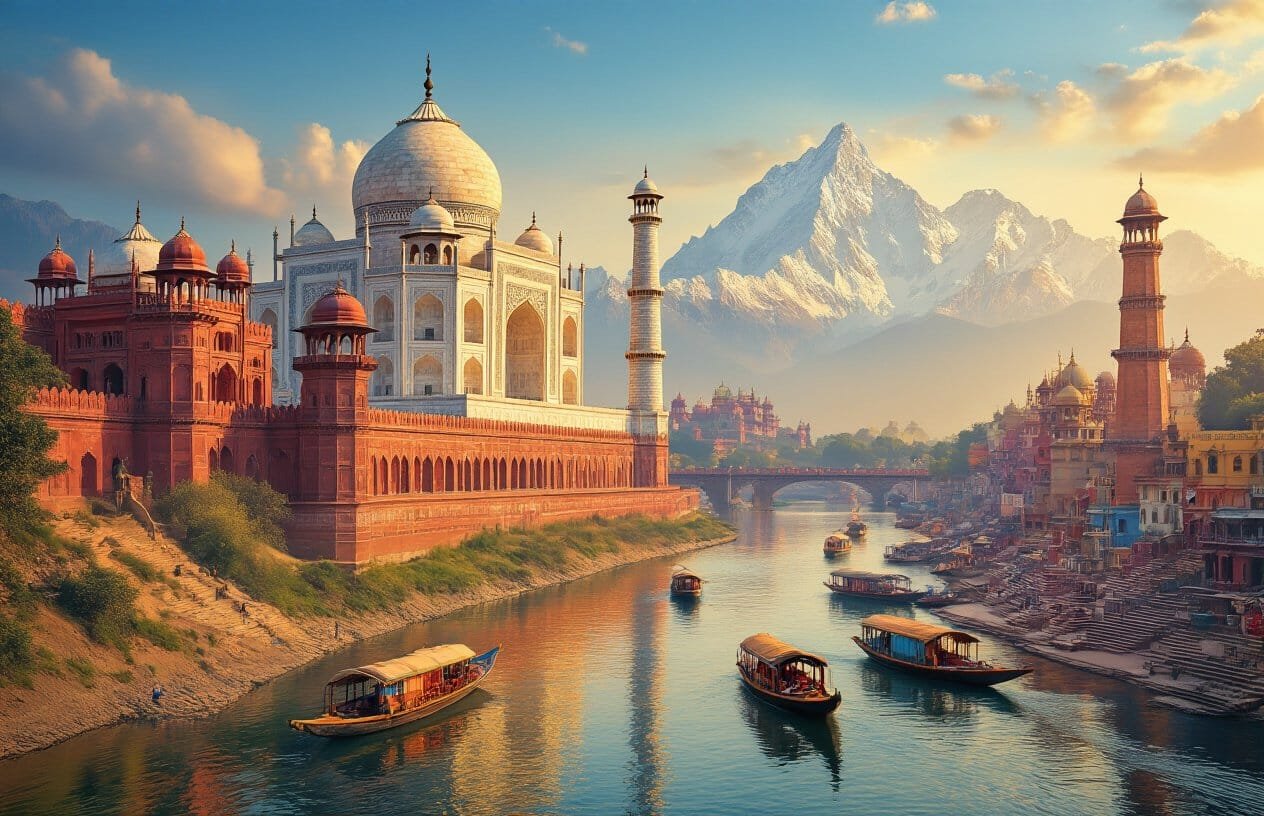
Golden Triangle Cities – Delhi, Agra, and Jaipur
Your journey through India’s most iconic destinations begins with the Golden Triangle, linking Delhi, Agra, and Jaipur. This historically rich circuit forms India’s most popular tourist route, offering you an incredible introduction to the country’s magnificent Mughal architecture, royal heritage, and vibrant culture.
Delhi: The Historic Capital’s Treasures
When you visit Delhi, you’re stepping into a living museum where almost every street corner reveals historic buildings, ancient monuments, or timeworn tombs. As India’s capital, Delhi serves as the perfect starting point for your comprehensive India travel experience, combining the chaos of Old Delhi with the planned grandeur of New Delhi.
Your must-see list should include the UNESCO World Heritage-listed Humayun’s Tomb in Nizamuddin, where you’ll witness the architectural precursor to the Taj Mahal. The towering Qutab Minar in south Delhi showcases the Delhi Sultanate’s architectural prowess, while the massive Jama Masjid and the imposing Red Fort in Old Delhi demonstrate Mughal grandeur at its finest.
Don’t miss the Jantar Mantar observatory in New Delhi, where 18th-century astronomical instruments still function today. For a modern architectural marvel, visit the 1980s Bahai House of Worship, known as the Lotus Temple, and pay your respects at India Gate, the war memorial at the heart of Delhi’s government district.
Delhi’s intensity and chaos will overwhelm your senses, but you’ll discover some of the finest cuisine and street food in the country here. The evening entertainment scene in Hauz Khas Village proves that Delhi knows how to unwind, while the famous markets of Karol Bagh, Janpath, Paharganj, Sarojini Nagar, Khan Market, and Chandni Chowk offer endless opportunities for souvenir hunting and affordable fashion finds.
Agra: The Monument to Eternal Love
Your next stop brings you face-to-face with the crown jewel of Indian architecture. Nothing prepares you for your first encounter with the Taj Mahal, one of the modern-day Seven Wonders of the World. This ivory-colored marble mausoleum, constructed by Mughal emperor Shah Jahan as a tomb for his beloved wife Mumtaz Mahal, represents the greatest monument to love ever created.
The Taj Mahal complex includes pristine gardens, two mosques, and a museum, all perfectly symmetrical and breathtaking in their beauty. For the best experience, you should visit at dawn or sunset when the marble takes on ethereal hues. The most spectacular views come from across the river at Mehtab Bagh Park, where you can capture the monument’s reflection without the crowds.
Your Agra exploration doesn’t end with the Taj Mahal. The spectacular Agra Fort, an expansive red sandstone structure along the Yamuna River banks, showcases monumental architecture through its Delhi Gate and private palaces and mosques. Most of Agra’s historical landmarks cluster conveniently along the river, making your sightseeing efficient and rewarding.
While in Agra, you must try the famous petha, a sweet treat made from candied white gourd that makes an excellent souvenir. An hour’s drive from Agra takes you to Fatehpur Sikri, the ghost-haunted ruined city that once served as the Mughal Empire’s capital under Emperor Akbar.
Jaipur: The Pink City’s Royal Splendor
Your Golden Triangle journey concludes in Jaipur, Rajasthan’s capital and the famous Pink City. Here, luxury, royalty, princes, elephants, jewels, and rugs create an atmosphere of pure indulgence that you’ll experience through amazing restaurants, bars, and palatial accommodations.
Jaipur represents the pinnacle of Rajasthani culture and architecture, where every palace and fort tells stories of royal grandeur. The city’s pink-hued buildings create a unique urban landscape that photographs beautifully and provides endless opportunities for exploration.
Your Jaipur experience should include visits to magnificent forts and palaces that showcase Rajput architecture at its finest. The city’s bustling bazaars offer you the chance to purchase authentic Rajasthani handicrafts, textiles, and jewelry while experiencing the vibrant local culture firsthand.
Rajasthan Desert Cities – Jaisalmer, Jodhpur, and Bikaner
Beyond the Golden Triangle, Rajasthan’s desert cities offer you a completely different but equally mesmerizing experience. These destinations showcase the state’s desert romance, blue-hued architecture, and authentic Rajasthani culture.
Jaisalmer: The Golden City’s Desert Magic
Jaisalmer earns its title as India’s city of gold through the gleaming color of its undulating sand dunes and sandstone buildings that glow magnificently in the setting sun. Your biggest attraction here is the living city inside Jaisalmer Fort, where you’ll discover traditional havelis (manors), royal palaces, timeless Hindu and Jain temples, and stalls selling locally-made artifacts, accessories, jewelry, and paintings.
Outside the fort, you can explore Jaisalmer’s heritage through opulent historic homes like Patwa’s Kotha Haveli and museum, and the five-story Tazia Tower in the Mandir Palace complex. Don’t miss the sandstone cenotaphs at Vyas Chhatri and the ancient stone buildings around Gadisar and Amar Sagar Lakes.
The famous sand dunes lie on Jaisalmer’s outskirts in the heart of the Thar Desert. While Sam Sand Dunes and Khuri are popular spots, overnight camel safaris that venture deeper into the desert will take you away from crowds and provide authentic desert experiences. For comfortable overnight desert stays, you can book nights at tented desert camps around Jaisalmer.
Your Jaisalmer experience should include camel safaris, where you’ll witness the desert’s stunning sunsets and spend nights under star-filled skies. Walking tours of the city reveal its medieval charm, while sunset safaris with dinner provide perfect romantic desert experiences.
Jodhpur: The Blue City’s Timeless Appeal
Jodhpur, India’s blue city, offers you a highly populated yet small-town atmosphere with narrow alleys where even rickshaws can’t navigate. If you love photography, this city provides endless opportunities with its blue-painted houses creating a stunning urban landscape against the desert backdrop.
The massive fort overlooking the town offers panoramic city views and houses museums showcasing royal artifacts and history. Your Jodhpur exploration should include heritage walking tours that reveal the city’s rich history and architectural marvels.
You should definitely visit the Bishnoi people on organized tours to learn about their unique environmental conservation practices and traditional lifestyle. These tours provide insights into rural Rajasthhan culture and demonstrate how communities can live in harmony with nature.
Your Jodhpur itinerary can include shopping day tours where you’ll discover local handicrafts, textiles, and spices. Food tours introduce you to authentic Rajasthani cuisine, while photography tours help you capture the city’s most photogenic locations.
Spiritual Cities – Varanasi and Amritsar
Your spiritual journey through India must include these two sacred destinations that represent different religious traditions but equally powerful spiritual experiences.
Varanasi: India’s Most Sacred City
Varanasi represents arguably India’s most sacred city, where you’ll witness the complete cycle of life and death playing out on the River Ganges banks. This ancient city, also known as Benaras, provides you with an unparalleled dose of spirituality that exists nowhere else in the world.
The city’s riverside ghats serve as gathering places where thousands of pilgrims bathe, seek redemption, cremate the dead, and participate in religious rituals. Your Varanasi experience centers on these ghats, where you can observe Hindu religious practices that have continued unchanged for millennia.
The Ganga aarti ceremony, traditionally conducted at dusk, creates an incredible visual spectacle that you shouldn’t miss. Many visitors also respectfully observe funeral services at Manikarnika Ghat, gaining insights into Hindu beliefs about death and rebirth.
Your walks through the city behind the ghats will introduce you to historic buildings including Ramnagar Fort, the revered Kashi Vishwanath Temple, Alamgir Mosque, and the Man Mandir Observatory. The Buddhist pilgrimage site of Sarnath, where Buddha preached his first sermon, lies just a short drive outside the city.
Varanasi’s thriving street food culture adds another dimension to your visit. The tangled lanes and bazaars overflow with vendors serving kachoris (fried stuffed pastries), chaats (savory snacks), jhal muri (puffed rice with vegetables and spices), and aloo puri (puffed flatbread with spiced potatoes).
Your Varanasi souvenirs should include Benarasi paan (betel nut for chewing with dried dates) and the famous Benarasi saree, woven from local silk with fine silver or gold brocade.
Amritsar: The Golden Temple’s Divine Beauty
The Golden Temple in Amritsar represents the most stunning temple you’ll ever see and serves as a major pilgrimage destination for Sikhs worldwide. This unique Sikh temple, constructed with gold plating, creates an absolutely breathtaking sight that transcends religious boundaries.
Your Amritsar visit can also include the bizarre Wagah border crossing with Pakistan, where daily ceremonies create literally bizarre spectacles of patriotic fervor from both sides. This experience provides unique insights into India-Pakistan relations and border dynamics.
Coastal and Southern Destinations – Kochi and Mumbai
Your comprehensive India travel experience must include coastal destinations that showcase the country’s maritime heritage and modern cosmopolitan culture.
Kochi: Kerala’s Historic Port City
If you’re visiting the historic port city of Kochi (Cochin), timing your visit during the Kochi-Muziris Biennale provides access to this popular contemporary arts festival. Kochi represents Kerala’s rich maritime heritage and multicultural influences from centuries of international trade.
Your Kochi exploration reveals Portuguese, Dutch, and British colonial architecture alongside traditional Kerala buildings. The city’s Chinese fishing nets, Jewish Quarter, and ancient churches demonstrate its diverse cultural heritage.
Mumbai: India’s Financial Capital
Mumbai serves as India’s financial capital and Bollywood headquarters, offering you experiences ranging from colonial architecture to modern skyscrapers, from street food markets to high-end restaurants, and from crowded local trains to luxury hotels.
Eastern India – Kolkata’s Colonial Heritage
Your Eastern India exploration centers on Kolkata, the former capital of British India, where colonial heritage meets vibrant Bengali culture. This intellectual and cultural hub provides you with unique experiences unavailable elsewhere in India.
Kolkata’s colonial architecture, literary traditions, and artistic heritage create a distinctly different Indian experience. Your visits can include the nearby Sunderbans, where vast mangrove forests house one of the world’s largest tiger populations and represent one of nature’s most remarkable ecosystems.
The Sunderbans area in West Bengal showcases one of the natural wonders of the world through its huge mass of mangroves. If you love nature and safaris, you’ll appreciate this destination located not far from Kolkata, where the Ganges River runs through the ecosystem, demonstrating the river’s massive scale.
Transportation and Getting Around India
Train Travel Booking and IRCTC System
Traveling by train in India offers you the most atmospheric way to explore this vast country, even when you consider the aging facilities on some parts of India’s extensive rail network. With more than 13,000 trains running daily on 68,103km of track, the Indian railway system carries a staggering 8 billion passengers per year, making it one of the world’s largest transportation networks.
Indian Railways operates almost all of the nation’s trains, which you’ll find identified by both name and number, as well as by their category of service. You’ll encounter three basic types of passenger trains during your journey: Express services are your best option, as they make fewer stops at minor stations, keeping your travel time reasonable. Mail trains offer similar service levels to Express trains. For faster journeys between major cities, you should seek out the newer Vande Bharat trains, Rajdhani Express services connecting Delhi to state capitals, Shatabdi Express trains for daytime travel between major cities within eight hours, or Duronto Express trains linking metropolitan areas with fewer stops.
When booking your train tickets, you’ll need to navigate India’s complex class system. Air-conditioned 1st class (1AC) represents the premium option, featuring two- or four-person compartments with lockable doors, seats that convert into beds, and meal service delivered directly to your seat. Two-tier and three-tier air-conditioned carriages (2AC and 3AC) provide excellent comfort with berths arranged in compartments for six passengers, making them ideal for overnight journeys while saving you hotel costs.
Sleeper class (SL) offers similar comfort to 3AC but with fans instead of air-conditioning, remaining an excellent choice for budget-conscious travelers. Unreserved 2nd class should be your last resort – while incredibly cheap, these carriages often become extremely crowded and are best reserved for short countryside journeys.
For booking train tickets, you have several options available. The official Indian Railway Catering and Tourism Corporation (IRCTC) website allows online booking, though the process can be complicated. You’ll need to set up an IRCTC account using a mobile phone, pay fees with a payment card, and verify your account through both phone and email. International booking sites like 12GoAsia offer simpler alternatives, though they only cover trains between larger towns. Services like Cleartrip and Make My Trip provide efficient booking options but still require an IRCTC account.
You should always book your tickets a few days in advance, particularly during festival periods when demand peaks significantly. If your desired train appears fully booked, don’t give up immediately. Special quotas exist for various passenger categories, including tourists, and you may secure a seat even when regular bookings show no availability. Waiting List (WL) bookings often convert to confirmed seats as other passengers cancel their reservations – if fewer than 10 people are ahead of you on the waiting list, your chances improve considerably.
Local Transportation – Rickshaws, Taxis, and Uber
Once you arrive in Indian cities, you’ll find yourself navigating a diverse array of local transportation options that range from traditional to ultra-modern. Urban transport systems vary dramatically across different cities, but you can expect to encounter everything from human-pulled rickshaws in Kolkata to sophisticated metro systems in major metropolitan areas.
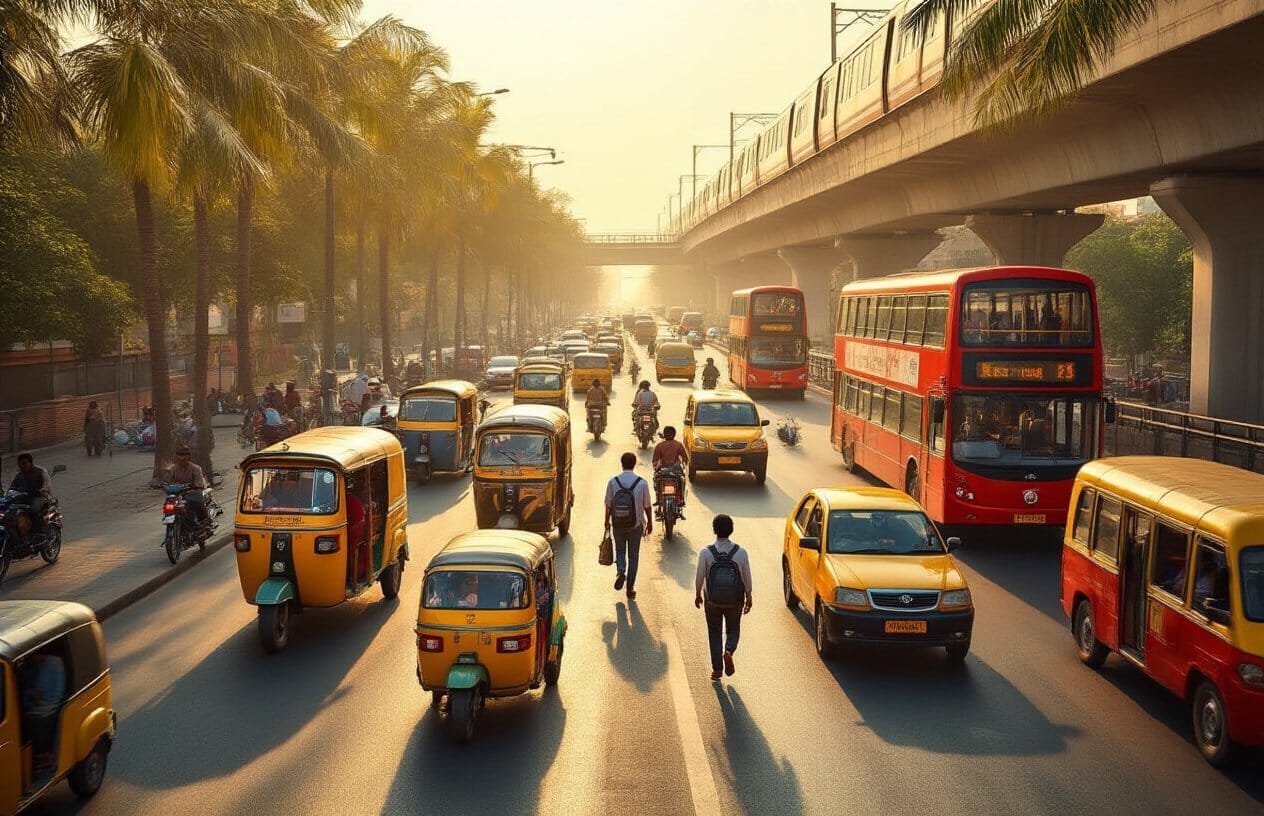
Auto-rickshaws – commonly called “autos” – represent the quintessential Indian urban transport experience. These three-wheeled vehicles consist of the front half of a motor scooter with two seats mounted on the back. You’ll find them cheaper than taxis, more agile in heavy traffic, and usually equipped with meters, though many drivers prefer negotiating fixed fares before departure. While auto-rickshaws can be unstable and their drivers sometimes reckless, they’re an integral part of the urban travel experience.
In major tourist centers, auto-rickshaw drivers may hassle you persistently on the street, sometimes positioning themselves directly in your path. Once you’re inside, some drivers might attempt to take you to several shops before reaching your destination. You’ll get better service by hailing a moving rickshaw rather than accepting rides from those waiting outside upscale hotels. Many auto-rickshaw drivers now offer rides through Uber and other rideshare apps at moderate prices, providing you with transparent pricing and GPS tracking.
Cycle rickshaws offer a slower, cheaper alternative that some foreign visitors find uncomfortable to use, given that drivers are often poorly paid pavement-dwellers earning minimal wages. However, refusing their services on moral grounds doesn’t improve their economic situation – they’ll earn even less without your business. As a foreigner, you’ll likely face inflated fare quotes, but consider whether haggling over small amounts that mean more to them than to you is worthwhile.
Taxis are available throughout India and can be hired for short trips, day excursions, or multi-day journeys. However, you should note that some taxis operate only within certain areas, so don’t expect every cab to transport you across state lines. Traditional taxis should use their meters officially, but many drivers resist this practice, requiring you to negotiate fares beforehand. Taxis waiting near tourist sites and train stations often overcharge, so you’ll get better rates by flagging down moving vehicles. Prepaid taxi stands at major transport hubs offer fixed-price rides, eliminating negotiation hassles.
Rideshare services including Uber, Ola, Lyft, and Bla Bla Car have revolutionized urban transportation in many Indian cities. These apps work in select cities, and interestingly, more rideshare drivers use auto-rickshaws than cars. You’ll find these services particularly useful for transparent pricing and reliable service quality.
Electric auto-rickshaws are becoming increasingly common as environmentally friendly alternatives, though they sometimes lack sufficient power for uphill journeys – particularly relevant when traveling to hilltop forts in Rajasthan. Always confirm with the driver that they can reach your destination before starting your journey.
For rickshaw travel, you should keep small denominations handy – ₹10, ₹20, and ₹50 notes – as drivers rarely carry change for larger bills. Don’t be overly aggressive when negotiating fares; drivers earn modest incomes, and a few extra rupees can significantly impact their daily earnings.
Best Road Trip Routes Across India
Road trips across India offer you unparalleled freedom to explore at your own pace, though the experience requires careful planning and realistic expectations about driving conditions. India’s road network covers the country’s 3.8 million square kilometers, connecting destinations from Ladakh in the far north to Tamil Nadu’s southern tip – a distance exceeding 3,200 kilometers.
The Manali to Leh route stands out as one of Asia’s premier motorcycle journeys, offering breathtaking Himalayan vistas and challenging high-altitude passes. This route takes you through some of the world’s most spectacular mountain scenery, though you should prepare for extreme weather conditions and altitude adjustments. Delhi’s Lalli Singh Adventures specializes in renting classic Royal Enfield motorcycles for such epic journeys, providing decades of experience supporting long-distance Himalayan expeditions.
When considering motorcycle rentals for road trips, you’ll need an international driving permit. While rental companies don’t always request this document, traffic police may ask to see it during roadside checks. Daily rentals for local exploration often require your passport as deposit security, though you may negotiate to leave a substantial cash deposit instead. Always ride defensively and yield to larger vehicles – Indian traffic conditions demand constant vigilance.
For those not comfortable with India’s challenging driving conditions, hiring a car with driver presents an excellent alternative. Costs remain reasonable when shared among several travelers, and you can arrange vehicles through travel agencies or local taxi stands operated by driver collectives. Many stands display printed lists of excursions with fixed prices, or you can arrange customized half-day, full-day, and multi-day trips.
When hiring drivers for extended journeys, verify that quoted prices include fuel and the driver’s food and accommodation – drivers typically make their own arrangements for meals and lodging. Ensure your driver speaks sufficient English for clear communication, as language barriers can complicate extended trips significantly.
Rajasthan’s Golden Triangle connecting Delhi, Agra, and Jaipur represents one of India’s most popular road trip circuits, offering manageable distances between major attractions and well-maintained highways. The diverse landscapes of Kerala provide excellent road trip opportunities, from coastal routes to hill station journeys through tea plantations and spice gardens.
Self-driving remains uncommon among tourists, and for good reason. India’s roads present numerous challenges: city traffic operates with minimal discipline, with vehicles cutting in and out without warning while pedestrians, cyclists, and cattle wander unpredictably. Rural roads are narrow, often poorly maintained, and dominated by overloaded trucks that yield to no one. Slow-moving bullock carts and livestock herds can occupy entire roadways.
Night driving poses particular dangers, as cyclists and cart drivers rarely use lights. If you’re involved in an accident, consider leaving the scene quickly to report to police immediately – crowds can assemble rapidly, especially when pedestrians or cattle are involved.
Bus Travel and Long-Distance Options
India’s extensive bus network serves as the backbone of the country’s transportation system, connecting virtually every destination at any hour through both state-owned and private operators. Buses run almost everywhere at almost any time, and even when direct services aren’t available, you’ll typically find connecting routes to complete your journey.
State-run “ordinary” buses offer the most economical option, though they stop frequently and admit passengers until even aisles overflow with people. These services provide an authentic Indian travel experience but can test your comfort tolerance on longer journeys. Prices increase progressively for various “deluxe” and “express” classifications, reaching premium levels for “Volvo” or “2×2” buses featuring airplane-style reclining seats.
Sleeper buses with flat beds operate on longer routes, though this might involve sharing sleeping space with strangers unless you’re willing to pay extra for solo berths. Private bus companies typically charge slightly higher fares than government services but offer significant advantages: convenient city office departures, multiple drop-off locations in destination towns, and generally better maintained vehicles.
You should exercise caution with overnight buses, as some drivers exploit emptier nighttime roads to drive at dangerous speeds. On mountain routes, avoid seats over wheels or behind rear axles unless you want to endure severe jolting throughout your journey.
International bus services connect India with Nepal, Bangladesh, Myanmar, and Pakistan, though some routes restrict foreign tourist access. State government-operated international services generally provide reliable service, but you should be wary of “tourist buses” operated by travel agencies. These services sometimes charge luxury bus fares while providing two separate local buses operating on either side of borders.
For bus travel logistics, more comfortable bus classes usually allow advance booking at bus stations or through travel agencies. On local buses, conductors walk through aisles collecting fares – don’t panic if your change doesn’t arrive immediately, as it’s often distributed when you disembark. If your change doesn’t materialize, a polite reminder typically resolves the issue.
Shared 4WDs complement bus services, particularly in mountainous regions where their smaller size and four-wheel drive capability provide advantages. These vehicles, ranging from vintage British Land Rovers to modern Tata and Maruti models, are sometimes called “shared jeeps” or “Sumos.” Drivers charge per seat, with premium pricing for roomier front seats beside the driver, and vehicles depart when full – or you can charter entire vehicles for immediate departure.
Shared 4WDs cost more than buses but offer superior comfort for reaching hill stations like Darjeeling and Leh in Ladakh. Their compact size allows navigation around landslides and on dirt roads unsafe for buses due to flooding or snow conditions. You’ll also find shared jeep services transporting tourists between bus and train stations to temples and tourist attractions for much less than taxi rates.
When traveling by bus, secure your luggage carefully. Bags typically travel in under-bus hatches or on roof racks – you may need to carry them up roof ladders yourself. Keep bags locked and remain vigilant during food and toilet stops. Electronic tracking tags like AirTags or Tiles provide peace of mind for luggage monitoring during long journeys.
Accommodation Options for Every Budget
Heritage Properties and Luxury Hotels
When you’re planning your comprehensive India travel guide experience, the country’s heritage properties and luxury hotels offer an unparalleled glimpse into royal grandeur and architectural magnificence. Your accommodation choices at this tier will transform your India travel itinerary from a simple vacation into an immersive cultural journey.
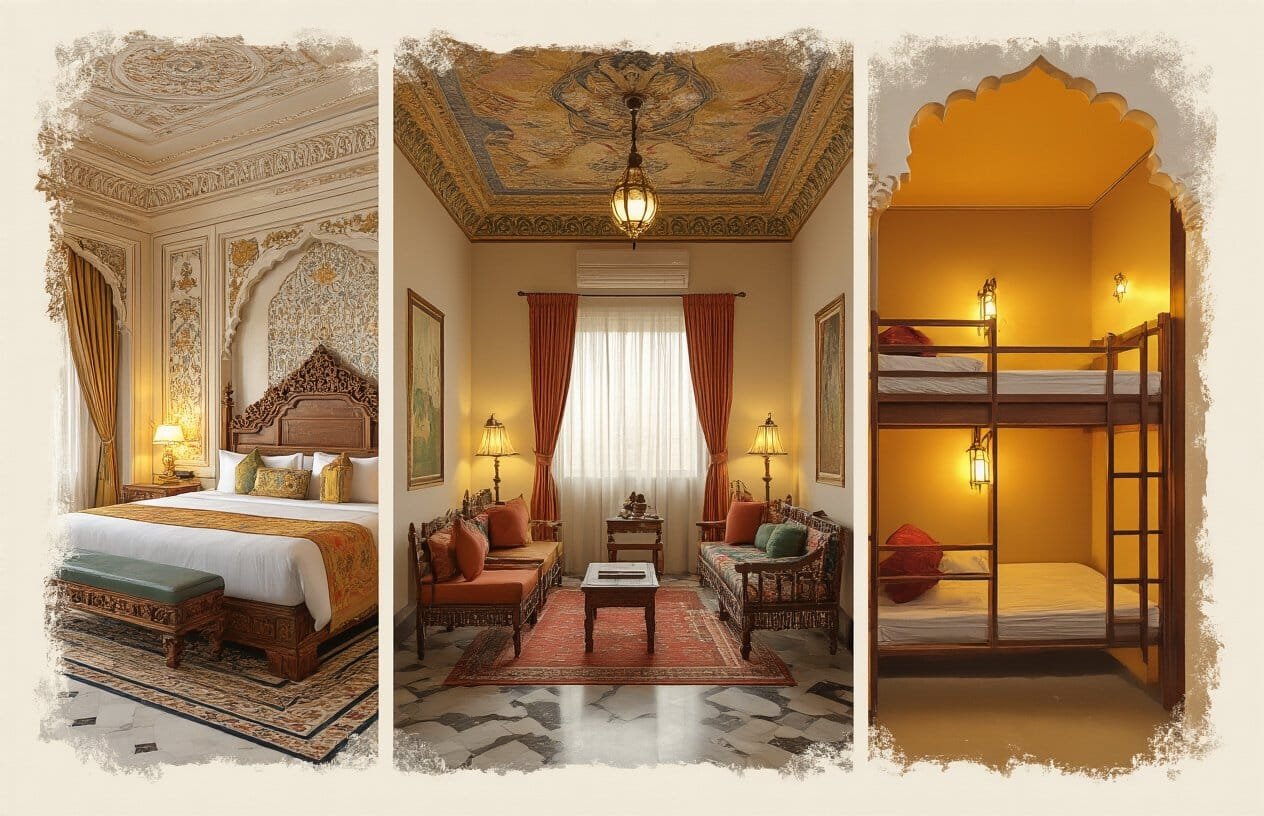
You’ll find that India’s luxury accommodation segment is dominated by converted palaces, forts, and havelis that have been meticulously restored to their former glory. These heritage properties allow you to live like maharajas and maharanis, sleeping in rooms where royalty once resided. The Taj Lake Palace in Udaipur, floating like a marble dream on Lake Pichola, represents the pinnacle of luxury accommodation in India. Your stay here includes butler service, private boat transfers, and dining experiences that overlook the City Palace complex.
In Rajasthan, your India travel planning should definitely include properties like the Oberoi Udaivilas, where you’ll experience world-class hospitality amid recreated Mewar palace architecture. The Rambagh Palace in Jaipur, once home to the Maharaja of Jaipur, now offers you the chance to stay in opulent suites with hand-painted frescoes and period furniture. Your mornings can begin with peacocks strutting across manicured lawns, while evenings might feature traditional Rajasthani performances in courtyards lit by torches.
The luxury hotel chains operating in India ensure your comfort meets international standards while incorporating local design elements. You’ll discover that properties like The Leela, Taj Hotels, and Oberoi Hotels maintain consistency in service quality across different cities in your India destinations. These hotels often feature award-winning spas where you can indulge in Ayurvedic treatments, multiple dining options showcasing regional and international cuisine, and concierge services that can arrange exclusive experiences like private museum tours or helicopter rides over historic monuments.
Your India travel budget for luxury accommodations typically ranges from $200 to $1,500 per night, depending on the property’s exclusivity, location, and seasonality. Palace hotels in prime locations during peak season command premium rates, but the experience justifies the investment. Many luxury properties offer package deals that include airport transfers, guided tours, cultural performances, and specialty dining experiences.
When you’re booking heritage properties, you’ll notice that many maintain original architectural features like carved pillars, mirror work, and period furniture, while modern amenities ensure your comfort. The bathrooms often feature marble work and traditional fixtures, and some rooms include private courtyards or balconies overlooking gardens or water bodies.
Mid-Range Hotels and Guesthouses
Your India travel guide experience doesn’t require luxury-level spending to be comfortable and memorable. Mid-range accommodations in India offer excellent value, combining clean, comfortable rooms with good service and strategic locations that enhance your India travel planning.
You’ll find that India’s mid-range hotel segment has evolved significantly, with both domestic and international chains offering consistent quality across major tourist destinations. Properties like Hotel chains such as Lemon Tree Hotels, Ginger Hotels, and Red Fox Hotels provide you with modern amenities including air conditioning, complimentary Wi-Fi, in-house restaurants, and 24-hour room service. These hotels understand the needs of travelers following a comprehensive India travel guide and often provide tour assistance, currency exchange, and local transportation arrangements.
In cities like Delhi, Mumbai, and Bangalore, your accommodation options include boutique hotels that reflect local character while maintaining international comfort standards. You’ll discover properties in converted havelis in Old Delhi, art-deco buildings in Mumbai’s Colaba district, or modern eco-friendly hotels in Bangalore’s business districts. These mid-range options typically feature restaurants serving both Indian and continental cuisine, business centers, and sometimes swimming pools or fitness facilities.
Guesthouses represent another excellent mid-range option for your India travel itinerary. Unlike impersonal hotel chains, guesthouses often provide you with personalized service and local insights that enhance your travel experience. Family-run guesthouses in destinations like Rishikesh, Pushkar, and Hampi offer you authentic interactions with local hosts who can recommend off-the-beaten-path attractions and arrange unique experiences.
Your India travel budget for mid-range accommodations typically ranges from $25 to $80 per night. This price range gets you private rooms with attached bathrooms, daily housekeeping, and basic amenities. Many mid-range properties include complimentary breakfast, which not only saves money but also ensures you start your day with familiar food options if you’re adjusting to Indian cuisine.
When you’re selecting mid-range accommodations, you’ll want to prioritize location, cleanliness, and guest reviews. Properties located near metro stations, bus stops, or main tourist areas save you time and transportation costs. Many mid-range hotels offer room categories from standard to deluxe, allowing you to choose based on your specific needs and budget constraints.
The service quality in mid-range accommodations often exceeds expectations, with staff members who speak English and understand tourist requirements. You’ll often find that front desk personnel can assist with train bookings, arrange guided tours, recommend restaurants, and provide local maps and information that support your India travel planning efforts.
Budget Hostels and Homestays
Your India travel advice wouldn’t be complete without exploring the vibrant world of budget accommodations that have revolutionized backpacking and budget travel across the country. These options allow you to stretch your India travel budget while connecting with fellow travelers and experiencing authentic local hospitality.
Hostels in India have embraced international backpacker culture while incorporating local elements that make your stay uniquely Indian. You’ll find dormitory-style accommodations with bunk beds, shared bathrooms, common areas for socializing, and kitchens where you can prepare your own meals. Properties like Zostel, Backpacker Panda, and Mad Monkey Hostels have established networks across popular destinations in your India travel itinerary, ensuring consistent quality and services.
Your budget accommodation experience in hostels typically includes amenities like free Wi-Fi, lockers for valuables, laundry services, and common areas designed for socializing. Many hostels organize group activities such as city walks, cooking classes, or cultural performances that enhance your comprehensive India travel guide experience while helping you meet other travelers. The staff at these establishments often consists of young, travel-savvy individuals who understand backpacker needs and can provide valuable India travel tips.
Homestays represent perhaps the most authentic accommodation option for your India travel planning. When you stay with local families, you gain insights into daily Indian life that no guidebook can provide. Your hosts often treat you as family members, sharing meals, stories, and local knowledge that transforms your understanding of Indian culture. Homestays are particularly popular in destinations like Kerala’s backwaters, Himalayan hill stations, and rural Rajasthan.
Your homestay experience might include participating in daily routines like morning prayers, helping with cooking, or joining family celebrations if you’re lucky enough to visit during festivals. The accommodation typically consists of clean, simple rooms with basic amenities, and meals prepared by the family using fresh, local ingredients. This option not only supports local communities directly but also provides you with authentic cultural immersion.
The cost of budget accommodations ranges from $3 to $20 per night, making them ideal for extending your India travel budget. Dormitory beds in hostels typically cost $3-8 per night, while private rooms in hostels or homestays range from $8-20. Many budget properties include breakfast or offer meal options at very reasonable prices.
When you’re booking budget accommodations, you’ll want to read recent reviews carefully, as quality can vary significantly. Look for properties that emphasize cleanliness, security, and positive guest interactions. Many budget accommodations now use booking platforms that allow you to see photos, read detailed reviews, and compare prices across different properties.
Your India travel safety considerations for budget accommodations should include checking for proper licenses, secure entry systems, and clean bathroom facilities. Many hostels and homestays now provide female-only dormitories and enhanced security measures that make solo travel more comfortable and secure.
Recommended Stays by City
Your India destinations require specific accommodation recommendations that consider each city’s unique character, tourist attractions, and logistical requirements. These city-specific suggestions will optimize your India travel planning by ensuring you stay in areas that provide easy access to major attractions while offering the amenities and atmosphere that match your travel style.
Delhi offers you accommodation options that reflect the city’s dual nature as both ancient capital and modern metropolis. In New Delhi, you’ll find luxury properties like The Imperial and The Lodhi that provide easy access to India Gate, Rajpath, and government buildings. For your comprehensive India travel guide experience, consider staying near Connaught Place, which offers mid-range hotels with excellent connectivity to both Old and New Delhi attractions. Budget travelers should explore the Paharganj area near New Delhi Railway Station, where numerous hostels and budget hotels cater to backpackers following India travel itinerary routes.
Mumbai accommodation planning should focus on areas like Colaba, Fort, and Bandra, which provide you with access to the city’s business districts, tourist attractions, and nightlife. The Taj Mahal Palace hotel near the Gateway of India represents the pinnacle of luxury, while mid-range options in Colaba offer you easy access to restaurants, shops, and ferry services to Elephanta Caves. Your India travel budget can be optimized by staying in Andheri or Vashi, which offer lower rates while maintaining good connectivity to central Mumbai via local trains.
Jaipur presents you with unique opportunities to stay in converted palaces and heritage properties that enhance your cultural experience. The City Palace area offers luxury heritage hotels, while the areas around Hawa Mahal and Jantar Mantar provide mid-range accommodations within walking distance of major attractions. Budget travelers can find excellent value in the old city area, where family-run guesthouses offer authentic Rajasthani hospitality and easy access to markets and historic sites.
Agra accommodation should prioritize proximity to the Taj Mahal and Agra Fort while considering your India travel budget. Luxury hotels in the Taj Ganj area offer Taj Mahal views from rooms and restaurants, creating unforgettable experiences for special occasions. Mid-range hotels near Sadar Bazaar provide you with good access to both monuments and shopping areas, while budget accommodations in the backpacker area of Taj Ganj offer dormitory and private room options at very reasonable rates.
Goa requires different accommodation strategies depending on your preferred beach experience and party preferences. North Goa areas like Calangute and Baga offer you extensive accommodation options from luxury beach resorts to budget beach shacks, with easy access to nightlife and water sports. South Goa provides more peaceful alternatives in areas like Palolem and Agonda, where you can find boutique resorts and eco-friendly accommodations that cater to travelers seeking relaxation over excitement.
Kerala backwater destinations like Alleppey and Kumarakom offer you unique accommodation experiences on houseboats that cruise through palm-lined waterways. These floating accommodations typically include meals, guided tours, and cultural performances, making them excellent value despite higher per-night costs. Hill stations like Munnar provide you with plantation bungalows and mountain resorts that offer cool climates and scenic beauty as alternatives to coastal accommodations.
Varanasi accommodation planning should consider proximity to the ghats and your tolerance for the city’s intense spiritual atmosphere. Heritage hotels in converted havelis offer you authentic experiences with modern comforts, while guesthouses near Dashashwamedh Ghat provide easy access to evening aarti ceremonies and boat rides. Budget travelers can find ashram accommodations that offer simple rooms and vegetarian meals in spiritual settings.
Your India accommodation options reflect the country’s incredible diversity, from palace hotels that preserve royal heritage to simple homestays that showcase everyday Indian life. Each choice you make influences not just your comfort level but also the depth of your cultural experience and the impact on your overall India travel budget. The key lies in matching your accommodation choice with your travel objectives, whether you seek luxury, authenticity, social interaction, or budget optimization.
Food, Dining, and Safety Precautions
Indian Cuisine Diversity and Regional Specialties
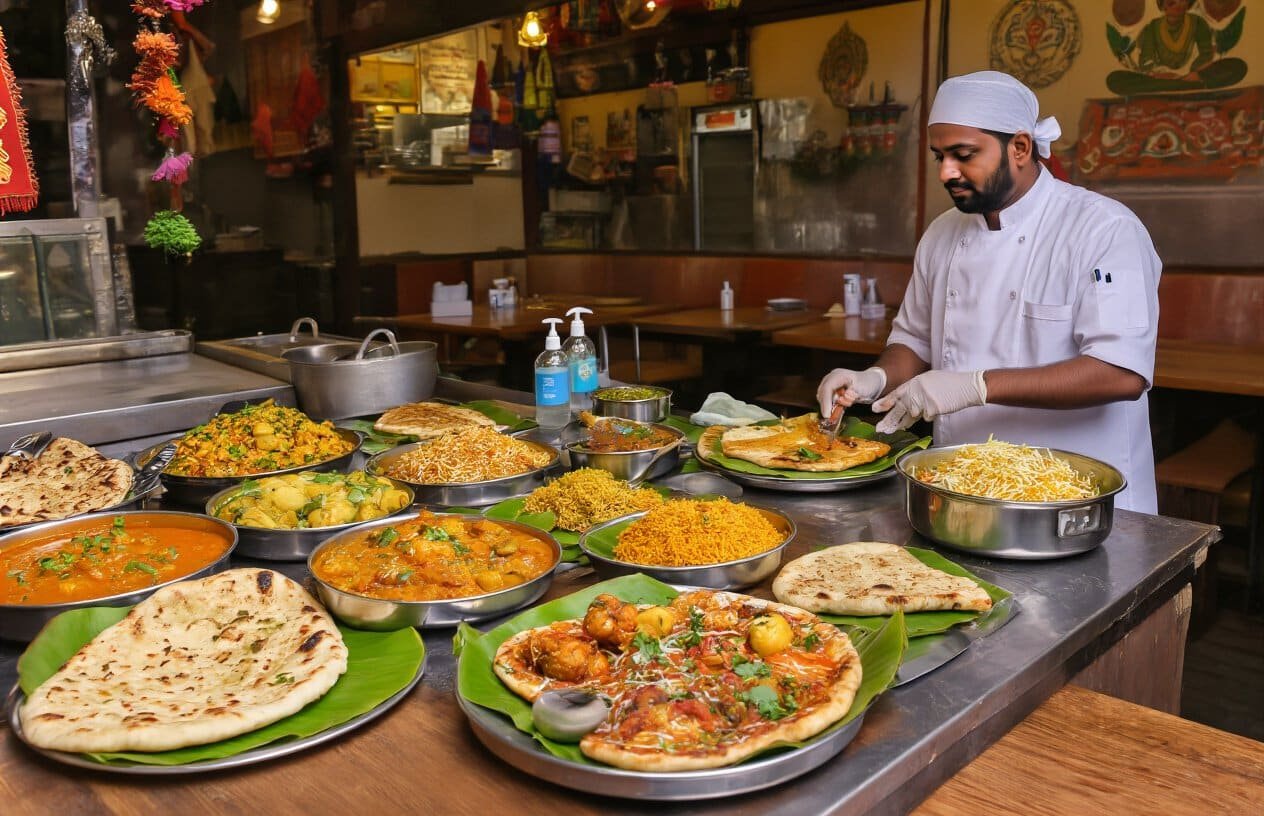
India’s culinary landscape represents one of the world’s most diverse and complex food cultures, with each region offering its own distinctive specialties that reflect local ingredients, climate, and cultural influences. When you travel across this vast country, you’ll discover that Indian cuisine extends far beyond what you might know from restaurants in your home country.
As you explore India, you’ll find that each region boasts unique breakfast traditions that provide an excellent introduction to local flavors. In the southern states, you’ll encounter dishes like Idly-Sambar (steamed rice cakes served with lentil curry), Idly-Vadday, and Puttu – all of which offer authentic regional tastes that locals enjoy daily. These breakfast options are generally safe choices for travelers and provide an excellent way to experience genuine Indian flavors without venturing into potentially risky street food territory.
The diversity becomes even more apparent as you move between states. You’ll discover that curries vary dramatically in their preparation methods, spice combinations, and primary ingredients. What you experience as “Indian curry” actually encompasses hundreds of different preparations, each with its own regional identity. The paneer (fresh cheese) curries alone will leave your mouth watering for more, offering rich, creamy textures that demonstrate why vegetarian cuisine dominates Indian culture.
Your culinary journey will reveal that Indian food culture centers around wonderful family time and amazing food experiences. Each region you visit will surprise you with its own specialties of food, snacks, and endless exquisite sweets made from milk, sugar, and wheat. The incredible variety means you could eat different dishes every day for months without repeating a single meal.
When you’re staying in business hotels rather than tourist-focused establishments, you’ll often find they serve excellent regional breakfasts that provide authentic local experiences. These venues typically offer dishes like Uttapam and Pav Baji, which represent the kind of quality regional cuisine that locals prefer.
Street Food Safety and Where to Eat
Your approach to street food in India requires careful consideration of both the incredible flavors you’re missing and the potential health risks you’re avoiding. While India’s street food scene offers some of the most authentic and affordable culinary experiences in the country, your safety should remain the primary concern when making dining decisions.
The reality of street food safety means you’ll need to make difficult choices between experiencing authentic local cuisine and protecting your health during your travels. Many experienced travelers recommend avoiding street food entirely, despite its appealing appearance and incredibly low costs. This cautious approach stems from the reality that food poisoning can derail your entire vacation, potentially confining you to your hotel room for several days.
When you’re deciding where to eat, pay close attention to whether the food stall or restaurant is well attended and whether the guests are well dressed. These visual cues usually indicate something positive about the food quality and hygiene standards. Well-frequented establishments with a good local clientele often maintain higher standards because their reputation depends on customer satisfaction.
Your safest dining strategy involves choosing busy, clean, 4-5 star restaurants that maintain international hygiene standards. These establishments, often connected to quality hotels, provide the best balance between experiencing authentic Indian cuisine and maintaining your health throughout your trip. While this approach might cost more than street food, you’ll avoid the potential expense and misery of falling ill during your vacation.
If you encounter street food stalls serving meat, particularly chicken, exercise extreme caution. Only consider well-cooked options, and remember that even experienced India travelers have suffered from Delhi Belly after eating improperly prepared chicken dishes. The cooking process at street level often lacks the temperature controls and hygiene standards necessary to ensure meat safety.
Business hotels generally offer better dining options than tourist-focused establishments. These venues cater to discerning local business travelers and typically maintain higher food safety standards while serving authentic regional cuisine. You’ll find that business hotels often provide excellent breakfast options featuring local specialties prepared with proper hygiene protocols.
Avoiding Delhi Belly and Food Poisoning
Your preparation for avoiding Delhi Belly should begin weeks before your departure, focusing on both preventive measures and building your body’s defenses against potential foodborne illnesses. The dreaded Delhi Belly, medically known as traveler’s diarrhea, affects many visitors to India, but proper precautions can significantly reduce your risk.
Building your gut health before travel plays a crucial role in preventing illness. If you’re already a regular consumer of probiotics and kombucha, continue this regimen and possibly increase it before your trip. Preparing your gut with good bacteria creates a stronger defense system when encountering new bacterial environments. Even in first-world countries, tap water can cause stomach issues for travelers, so maintaining healthy gut bacteria provides essential protection.
Your vaccination schedule should include updates for Hepatitis A and Typhoid, both potentially serious conditions that can be prevented through proper immunization. These vaccinations require several weeks or months to become fully effective, so plan your medical preparations well in advance of your travel dates. Consult with a travel medicine specialist who can provide comprehensive advice based on your specific itinerary and health history.
When you start feeling any digestive discomfort, some travelers swear by drinking a Coke as an immediate remedy. While this might seem unconventional, the theory suggests that Coke’s acidity might help combat harmful bacteria. Whether this works through actual bacterial action or psychological comfort, many experienced travelers consider it a useful emergency measure.
Your eating habits should emphasize less meat consumption while in India. Meats always carry higher risks for food poisoning, so embracing India’s delicious vegetarian cuisine provides both safety benefits and authentic cultural experiences. Indian vegetarian food offers such incredible variety and flavor that you might find yourself perfectly satisfied without any meat dishes.
Consider packing homeopathic remedies that are readily available and inexpensive in Indian pharmacies. Peppermint oil, in particular, offers potential digestive relief at minimal cost. Other natural remedies include charcoal tablets, garlic supplements, wormwood, and grapefruit seed extract – all of which some travelers find helpful for digestive issues.
If you do start experiencing symptoms, local medicines are often more suited to treating illnesses common in India and are significantly cheaper than imported alternatives. Don’t hesitate to seek medical attention if symptoms persist or worsen. You won’t be the first tourist to experience digestive issues in India, and medical professionals there have extensive experience treating these conditions.
Water Safety and Beverage Guidelines
Your water consumption strategy in India requires constant vigilance and careful planning, as contaminated water represents one of the most common sources of traveler’s illness. The fundamental rule involves avoiding drinking water from any unknown sources, including seemingly innocent ice cubes that might be made from tap water.
Always insist on bottled water, and make sure you hear the distinctive “crack” or “fizz” when opening bottles to ensure they haven’t been tampered with or refilled. If a bottle doesn’t make these sounds when opened, request a different bottle immediately. This precaution applies even in Western-looking hotels, where the appearance of quality doesn’t guarantee water safety standards.
Your dental hygiene routine requires special attention to water sources. It’s surprisingly easy to rinse your toothbrush or accidentally consume tap water before realizing what you’re doing. Bring bottled water to your bathroom sink before beginning your dental routine to avoid automatic habits that could expose you to contaminated water.
When you’re staying in hotels, request bottled water for all consumption purposes, even if the establishment claims their water is filtered or purified. Hotel water systems can be compromised at various points, and the risk isn’t worth the convenience of tap water access.
In remote areas, you might encounter water purification devices called ‘Doctor Water’ at juice stands and small establishments. While these devices can improve water quality, bottled water remains your safest option whenever possible. The effectiveness of purification systems can vary, and you have no way to verify their maintenance or proper operation.
If you need to wash produce, use only bottled water for cleaning fruits and vegetables. This practice becomes especially important if you’re purchasing items from local markets or street vendors. Remember that fruits you can peel yourself (like bananas and oranges) are generally safer than items with edible skins that might have been washed in contaminated water.
Your beverage choices should extend beyond just water safety to include considerations about dairy products and fresh juices. Yogurt-based drinks like lassi are generally considered safer because the fermentation process creates an acidic environment that inhibits harmful bacteria growth. However, ensure these drinks are prepared at reputable establishments with proper refrigeration.
Stay well hydrated throughout your trip, especially given India’s often hot and humid climate. Pack electrolyte replacement tablets to maintain proper mineral balance, particularly if you experience any digestive upset. Proper hydration supports your body’s natural defense systems and helps you recover more quickly from any minor digestive issues.
Consider bringing safe snacks from home, such as granola bars or applesauce packets, in case you start feeling queasy and need reliable food options. Having familiar, safe foods available provides peace of mind and ensures you have something to eat if local options seem risky.
Your approach to beverages should also consider timing and location. Drinks consumed at established restaurants during busy periods are generally safer than those from isolated vendors or during off-peak hours when turnover might be slower and refrigeration less reliable.
Remember that prevention remains far more effective than treatment when it comes to water-related illness in India. While the country’s tourism infrastructure has improved significantly in recent years, maintaining strict water safety practices throughout your trip provides the best protection against preventable illnesses that could compromise your travel experience.
Budget Planning and Cost Breakdown
Daily Food and Drink Expenses
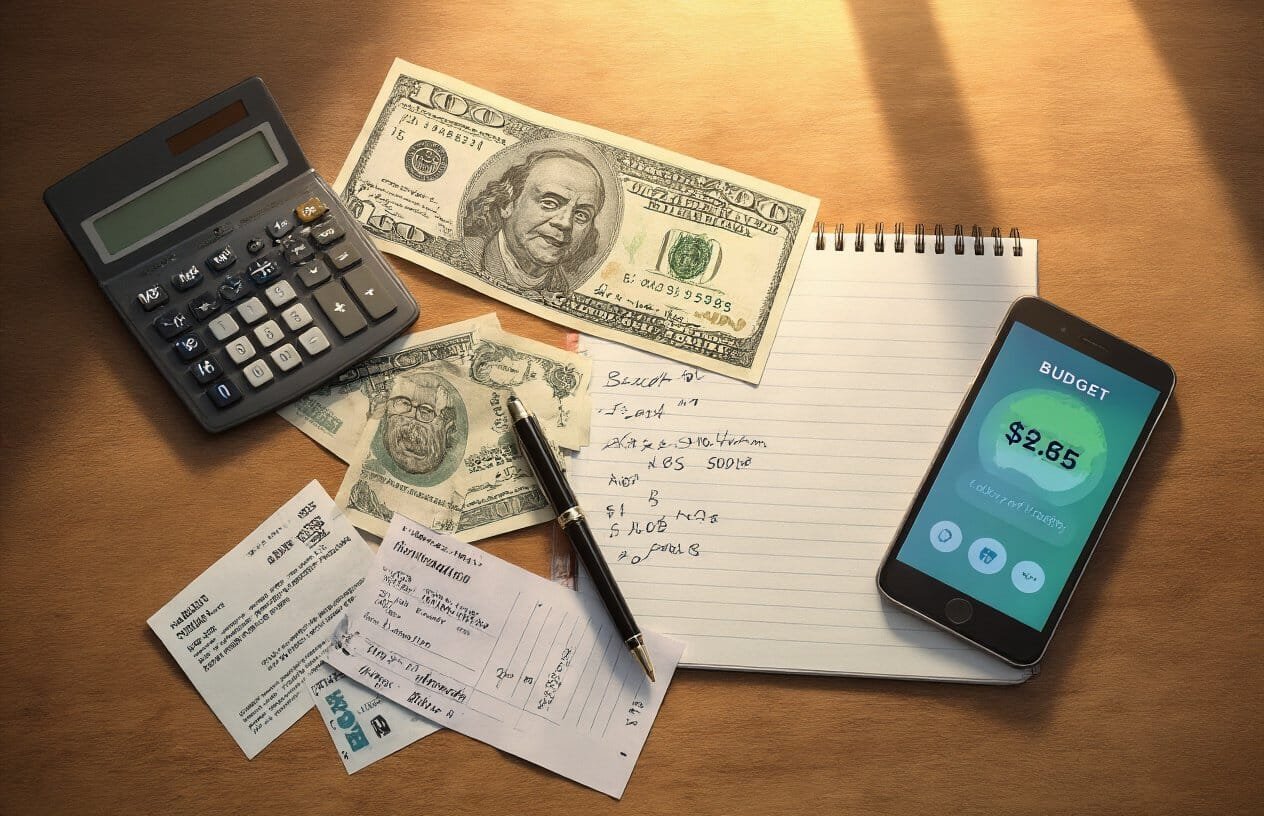
When planning your India travel budget, you’ll find food costs to be remarkably affordable, with incredible value for money. Based on traveler experiences, you can expect to spend between INR 200 to 400 per meal (approximately $3-4), and even these modest amounts will provide you with some of the most delicious meals you’ve ever experienced.
For breakfast, you’ll typically pay around INR 100-200 ($1.2-3) for local options like omelettes, parathas, idli, or dosa, along with a cup of tea or coffee. A fulfilling lunch or dinner at local restaurants will cost you a minimum of INR 80-150 ($1-2) per meal. Many of the guesthouses and homestays include breakfast in their room rates, which can significantly reduce your daily food expenses.
If you prefer dining at nicer restaurants occasionally, expect to spend approximately INR 250-400 ($3-6) per meal, excluding alcohol. For those planning to indulge in fine dining experiences at five-star hotels with great views, meals can range from INR 1,200-3,000 ($15-35) per person.
Street food presents an excellent opportunity to experience authentic Indian cuisine at incredibly low prices. However, you should maintain proper hygiene practices by carrying hand sanitizer and using it regularly, especially before eating. Most travelers who follow a vegetarian diet during their stay report fewer stomach issues while still enjoying phenomenal meals.
Your total daily food budget should average around $7.40 per day for a comfortable mid-range experience, though budget travelers can easily manage with less by sticking to local eateries and street food options.
Transportation Costs Within Cities
Getting around Indian cities is remarkably affordable, with multiple transportation options to suit different budgets. Uber and Ola (India’s version of Uber) have revolutionized city transportation, making it both convenient and budget-friendly. You’ll find that a one-hour drive across a major city like Delhi costs only around $7, while most rides within cities cost just $1-2.
These ride-hailing apps also serve as excellent negotiation tools when dealing with auto-rickshaw drivers. Simply show them the Uber price for your destination, and they’ll often match or beat that rate. For reference, expect to spend approximately $20 over three weeks for rickshaw rides and about $63 for Uber rides during the same period.
Public transportation within cities varies by location but remains consistently affordable. Local buses are the cheapest option, though they can be crowded and may require some local knowledge to navigate effectively. Metro systems in cities like Delhi and Mumbai offer clean, efficient transportation at very low costs.
For budget travelers, you should account for an average daily cost of INR 1,200 ($15) per person for all transportation needs within cities. This includes a mix of public transport, auto-rickshaws, and occasional Uber rides. Mid-range travelers who prefer more comfortable options should budget around INR 3,500 ($45) per day for transportation, which allows for more frequent use of air-conditioned vehicles and private cars.
Auto-rickshaws remain a quintessential Indian experience, but always negotiate the fare beforehand or insist on using the meter. In tourist areas, drivers often quote inflated prices, so having the Uber app as a reference point is invaluable for fair pricing.
Attraction Entry Fees and Activity Prices
India operates a tiered pricing system for monument entry fees, charging foreigners approximately 15 times more than Indian citizens. While this might seem unfair initially, it’s designed to ensure all Indian citizens can access their cultural heritage regardless of economic status. Children under 12 typically enter free at most monuments, and valid student IDs often provide significant discounts.
You should budget approximately INR 7,000 ($85) per person for monument entrance fees during your India trip. However, cities like Delhi, Agra, and Jaipur will require higher sightseeing budgets due to their numerous attractions. For example, the iconic Taj Mahal costs INR 1,250 ($18) for entry, while other major attractions like the Red Fort, Humayun’s Tomb, and Agra Fort each cost INR 550 ($8).
Entry fees for various attractions include:
- Qutub Minar, Delhi: INR 600 ($8)
- City Palace, Jaipur: INR 700 ($10)
- Mehrangarh Fort, Jodhpur: INR 600 ($8)
- Amber Fort, Jaipur: INR 500 ($7)
- City Palace, Udaipur: INR 300 ($4)
Activities and experiences vary significantly in cost but generally offer excellent value. Cooking classes, which typically last 3-4 hours and include a full meal, cost between INR 750-1,500 ($10-20). A street food walking tour in Delhi costs around INR 4,500 ($65), while a sunset lake cruise in Udaipur is just INR 300 ($4).
Adventure activities like camel and desert safaris from Jaisalmer cost approximately INR 2,450 ($34), while zip-lining in Jodhpur runs around INR 1,500 ($20). Day trips to places like Chittorgarh from Udaipur cost about INR 3,000 ($42), and full-day city tours including places like Jaipur and Amer cost around INR 4,000 ($56).
For a comprehensive two-week trip including various activities, you should budget approximately INR 6,000-10,000 ($110-150) per person. Your total activity and entrance fee costs will average around $14 per day for a well-rounded experience of India’s cultural and adventure offerings.
Money-Saving Tips for Budget Travelers
Now that we’ve covered the basic costs, implementing smart money-saving strategies can significantly reduce your overall expenses while maintaining a comfortable travel experience. Travel during off-season months, particularly avoiding December, January, and February when prices are at their peak. The monsoon season from mid-June to September offers the lowest prices, though you’ll need to factor in weather considerations.
Book your transportation well in advance, especially for important and longer train journeys. Train tickets are released three months ahead, and waiting until several weeks before departure often results in fully booked trains, forcing you to choose more expensive alternatives. For the most significant savings, aim to book your longest train routes immediately when tickets become available.
Accommodation represents your largest daily expense, so choosing wisely here can dramatically impact your budget. India’s hostel scene has exploded over the past decade, growing from a single hostel to over 200 options. These hostels are safe, clean, fun, and excellent places to meet fellow travelers. Private rooms in hostels or simple guesthouses cost INR 750-1,500 ($9-20) per night, often including breakfast.
Consider homestays, which not only save money but provide authentic cultural experiences and exceptional hospitality. Many homestay owners go above and beyond, helping with SIM cards, arranging transportation, buying special dietary foods, and providing local insights that enhance your experience immensely.
Eat like a local to maximize both your cultural experience and savings. Always choose restaurants with plenty of customers, as high turnover usually indicates both good food and better hygiene. Avoid deserted establishments, and don’t hesitate to explore beyond touristy areas in larger cities to find authentic, affordable dining options.
Use technology to your advantage. Apps like 12Go Asia make booking trains online simple and transparent. Uber and Ola not only provide affordable transportation but serve as powerful negotiation tools with local drivers. Having these price references ensures you pay fair rates for all transportation.
Pack light to avoid overweight baggage fees, and always ask for discounts or seasonal deals at hotels, transport services, and attractions. Many places offer reduced rates for advance bookings or longer stays. Book flights well in advance and consider red-eye flights and budget airlines for the cheapest options.
For international connectivity, consider e-SIM options like Airalo instead of dealing with the complexities of local SIM cards. You’ll pay around $5 for 1GB or $13 for 3GB, eliminating the hassle of airport purchases and activation problems that can consume hours of your valuable travel time.
Travel insurance should never be compromised, regardless of budget constraints. SafetyWing offers coverage starting at approximately $1.50 per day, providing essential protection for medical emergencies, trip cancellations, and lost belongings. If you can’t afford travel insurance, you can’t afford to travel.
With careful planning and smart choices, your total daily budget can average $35-50 for budget travel, $55-90 for mid-range comfort, or $90-160 for luxury experiences. The key lies in prioritizing your spending on experiences that matter most to you while finding savings in areas where comfort can be reasonably compromised.
Health, Safety, and Practical Travel Tips
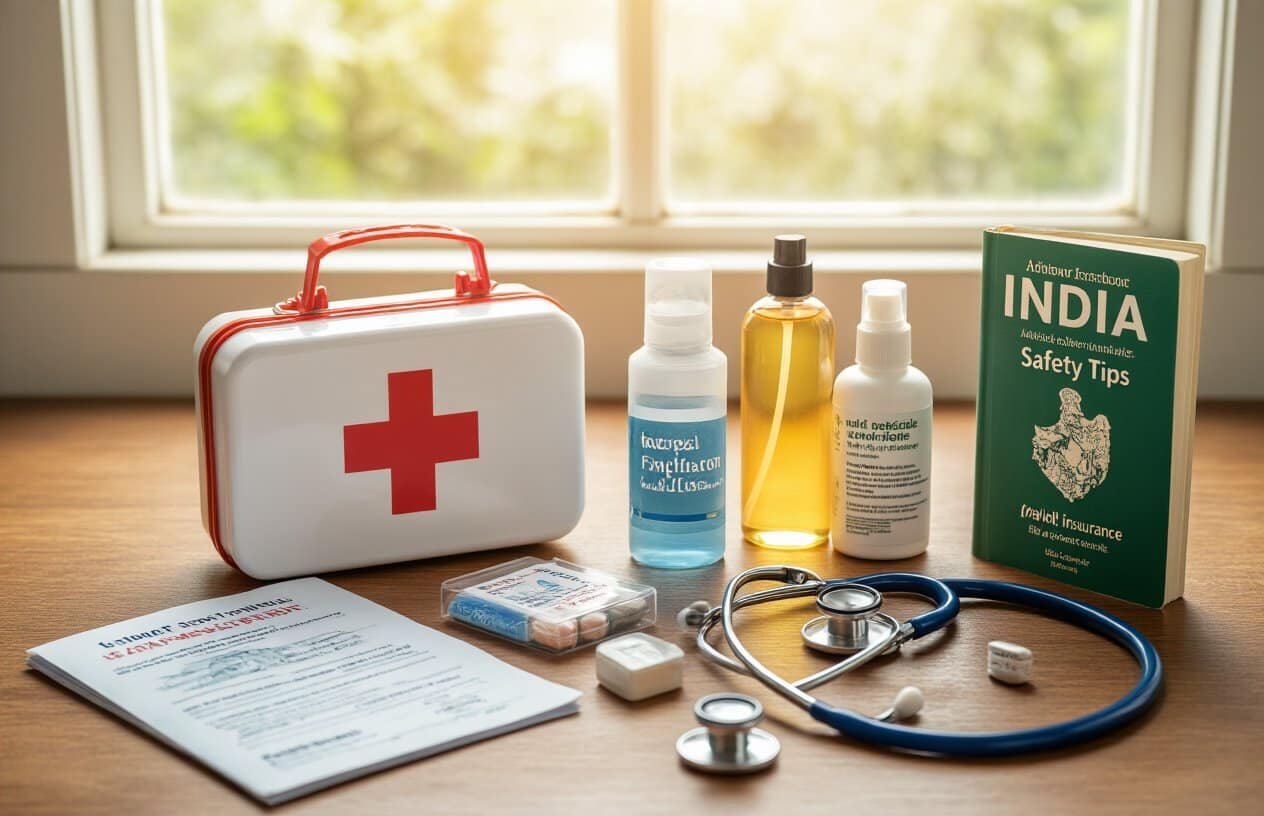
Vaccination Requirements and Health Precautions
When preparing for your comprehensive travel to India, understanding the vaccination requirements and health precautions is crucial for your safety and successful entry into the country. Your health preparations should begin well before your departure date to ensure you have adequate time for all necessary immunizations and medical consultations.
Routine Vaccinations
Before traveling to India, you must ensure you’re up-to-date on all routine vaccines. These fundamental immunizations include chickenpox (varicella), diphtheria-tetanus-pertussis, flu (influenza), measles-mumps-rubella (MMR), polio, and shingles vaccinations. These routine vaccines form the foundation of your health protection while traveling, and you should verify your immunization status with your healthcare provider at least 4-6 weeks before departure.
COVID-19 Vaccination Requirements
All eligible travelers should be up-to-date with their COVID-19 vaccines before traveling to India. You need to check the current COVID-19 vaccination requirements and ensure your vaccination status meets both Indian entry requirements and your home country’s return requirements.
Yellow Fever Vaccination
Yellow fever vaccination requirements depend on your travel history and route to India. If you’re traveling directly from the United States, the yellow fever vaccine is not required. However, if you’re arriving from countries with risk for yellow fever virus transmission, you must have a valid yellow fever vaccination certificate if you’re 9 months old or older.
The countries regarded by the Government of India as areas with yellow fever transmission risk include numerous African nations such as Angola, Benin, Burkina Faso, Burundi, Cameroon, Central African Republic, Chad, Congo, Côte d’Ivoire, Democratic Republic of the Congo, Equatorial Guinea, Ethiopia, Gabon, The Gambia, Ghana, Guinea, Guinea-Bissau, Kenya, Liberia, Mali, Mauritania, Niger, Nigeria, Rwanda, Senegal, Sierra Leone, South Sudan, Sudan, Togo, and Uganda. In the Americas, this includes Argentina, Bolivia, Brazil, Colombia, Ecuador, French Guiana, Guyana, Panama, Paraguay, Peru, Suriname, Trinidad & Tobago (Trinidad only), and Venezuela.
Without a valid yellow fever vaccination certificate when arriving from these areas, you will be detained in isolation for up to 6 days if you arrive within 6 days of leaving a risk area, have been in such areas during transit, or arrive on transportation that has been in these areas within 30 days.
Essential Vaccinations for India Travel
Hepatitis A vaccination is recommended for all unvaccinated travelers one year old or older going to India. If you’re an infant between 6-11 months old, you should also receive hepatitis A vaccination, though this early dose doesn’t count toward the routine 2-dose series. Travelers with vaccine allergies should receive immune globulin for effective protection up to 2 months. If you’re over 40, immunocompromised, or have chronic medical conditions and are departing within 2 weeks, you should receive both the initial vaccine dose and immune globulin simultaneously.
Hepatitis B vaccination is recommended for unvaccinated travelers younger than 60 years old. If you’re 60 or older and unvaccinated, you may still choose to get vaccinated before traveling to India.
Typhoid vaccination is recommended for most travelers to India, especially if you’re staying with friends or relatives or visiting smaller cities or rural areas where exposure risk is higher.
Japanese Encephalitis vaccination is recommended if you’re moving to India permanently, spending a month or more in affected areas, or frequently traveling to areas with Japanese encephalitis. You should consider vaccination if you’re spending less than a month but engaging in higher-risk activities like visiting rural areas, hiking, camping, or staying in accommodations without air conditioning, screens, or bed nets. The vaccine is not recommended for short-term urban travel.
Malaria Prevention
Malaria prevention requires special attention as the CDC recommends prescription medication for travelers to certain areas of India. Malaria transmission occurs throughout the country, including major cities like Mumbai and New Delhi. However, there’s no malaria transmission in areas above 2,000 meters (6,500 feet) elevation, including regions in Arunachal Pradesh, Himachal Pradesh, Jammu and Kashmir, Kerala, Ladakh, Sikkim, Tamil Nadu, and Uttarakhand.
The malaria parasites in India show chloroquine resistance, with P. falciparum accounting for 60% of cases, P. vivax for 40%, and P. malariae and P. ovale being rare. Your doctor will prescribe appropriate chemoprophylaxis such as atovaquone-proguanil, doxycycline, mefloquine, or tafenoquine. You must start taking malaria medication multiple days before your trip and continue during and after your travel.
Rabies and Other Disease Considerations
Rabies-infected dogs are commonly found throughout India, and rabies is also present in some terrestrial wildlife species. While rabies vaccines are typically available throughout most of the country, you should consult with your healthcare provider about pre-exposure vaccination, especially if you’ll be performing activities that increase exposure risk to potentially rabid animals or might have difficulty accessing prompt post-exposure prophylaxis.
Chikungunya presents elevated risk in India. Vaccination may be considered if you’re planning extended stays of 6 months or more. Cholera is presumed present in India, though it’s rare in travelers. Vaccination may be considered for children and adults traveling to areas of active cholera transmission, though avoiding unsafe food and water and proper hand hygiene remain your primary prevention methods.
Measles cases are rising worldwide, so ensure you’re fully vaccinated with MMR vaccine at least two weeks before departure. This includes early doses for infants 6-11 months old according to CDC recommendations for international travel.
Travel Insurance and Emergency Contacts
Securing comprehensive travel insurance and knowing essential emergency contacts forms a critical component of your India travel safety preparations. Given the potential health risks and security concerns throughout various regions of India, proper insurance coverage and emergency contact information can be lifesaving.
Travel Insurance Requirements
The U.S. government highly recommends purchasing travel insurance before your trip to India. Your insurance policy should include evacuation assistance, comprehensive medical insurance, and trip cancellation coverage. Given India’s limited emergency services in rural areas and the potential for various health risks, evacuation coverage becomes particularly important if you need to be transported to better medical facilities or back to your home country.
When selecting travel insurance for India, ensure your policy covers medical emergencies, hospitalization, prescription medications, emergency dental care, and medical evacuation. Additionally, verify that your coverage includes regions you plan to visit, as some insurers may exclude certain high-risk areas. Your policy should also cover trip interruption, baggage loss, and personal liability protection.
Emergency Contact Numbers
You must memorize and keep readily accessible the essential emergency contact numbers for India. The general police emergency number for landlines is 112, while mobile users should dial 100. For medical emergencies, ambulance services in parts of South India can be reached at 102 or 108. Fire emergency services use 101.
U.S. Consulate Contact Information
As an American traveler, you should have immediate access to all U.S. consulate contact information throughout India. The U.S. Embassy in New Delhi can be reached at +91-11-2419-8000. Regional consulates include the U.S. Consulate General Mumbai at +91-22-2672-4000, U.S. Consulate General Kolkata at +91-33-3984-2400, U.S. Consulate General Chennai at +91-44-2857-4000, and U.S. Consulate General Hyderabad at +91-40-6932-8000.
Smart Traveler Enrollment Program (STEP)
You should enroll in the Smart Traveler Enrollment Program (STEP) before your departure. This free service provided by the U.S. government allows the nearest U.S. embassy or consulate to contact you in case of emergency, natural disaster, or civil unrest. STEP enrollment also enables you to receive important safety and security updates about your destination and makes it easier for family and friends to contact you during emergencies.
Dress Codes for Religious Sites and Rural Areas
Understanding and respecting dress codes for religious sites and rural areas is essential for your successful travel experience in India. Proper attire demonstrates cultural sensitivity and ensures you’re granted access to sacred spaces while avoiding potential conflicts in conservative regions.
Religious Site Dress Requirements
When visiting religious sites throughout India, you must observe strict dress codes that vary by religion and specific location. For Hindu temples, you should wear modest clothing that covers your shoulders, arms, and legs. Many temples require removal of shoes before entering, so wear easily removable footwear. Some temples may require specific colors or prohibit leather items.
For Sikh gurdwaras, you must cover your head with a scarf or cloth, remove shoes, and wear modest clothing. Most gurdwaras provide head coverings if you don’t have one. For Muslim mosques, women should wear loose-fitting clothes covering arms and legs, plus a head covering, while men should wear long pants and shirts covering their arms.
Buddhist monasteries and temples typically require modest dress covering shoulders and legs, with shoe removal mandatory. Jain temples have particularly strict requirements, often prohibiting leather items entirely and requiring white or light-colored modest clothing.
Rural Area Dress Considerations
In rural areas of India, conservative dress becomes even more important for your safety and cultural integration. Rural communities often have more traditional values regarding appropriate clothing, especially for women. You should wear clothing that covers your shoulders, arms, and legs, avoiding tight-fitting or revealing garments.
Women traveling in rural areas should be particularly cautious about dress choices, as the U.S. government advises against women traveling alone in India due to safety concerns. Loose-fitting, modest clothing in neutral colors helps you blend in with local customs and reduces unwanted attention.
Practical Dress Recommendations
Choose lightweight, breathable fabrics suitable for India’s climate while maintaining modesty. Cotton and linen work well in hot weather while providing appropriate coverage. Carry a large scarf or shawl that can serve multiple purposes: covering your head for religious sites, providing extra modesty when needed, or protecting against sun and dust.
Avoid clothing with religious symbols from other faiths, political messages, or images that might be considered offensive. Pack easily removable shoes for frequent temple visits, and consider bringing socks to protect your feet on potentially hot or rough temple floors.
Staying Connected with eSIM and Wi-Fi Options
Maintaining reliable communication during your India travel is essential for safety, navigation, and staying connected with family and emergency services. Understanding your connectivity options helps ensure you can access important information and assistance when needed.
Communication Technology Restrictions
Before exploring connectivity options, you must understand India’s strict regulations regarding communication devices. Possessing satellite phones or GPS devices is illegal in India and can result in penalties of up to $200,000 or jail time up to 3 years. These restrictions apply to all travelers, and violations are taken seriously by Indian authorities.
eSIM Technology for India
eSIM technology offers convenient connectivity options for travelers to India, allowing you to maintain communication without the hassle of physical SIM card swaps. Many international carriers now offer India eSIM plans that you can purchase and activate before departure or upon arrival.
When selecting an eSIM plan for India, consider your data needs, call requirements, and travel duration. Some eSIM providers offer regional plans covering multiple countries if your travel extends beyond India. Ensure your device supports eSIM technology and is unlocked for international use before purchasing an eSIM plan.
Wi-Fi Availability and Safety
Wi-Fi availability varies significantly across India, with better coverage in urban areas, hotels, restaurants, and tourist destinations. Major cities like Mumbai, New Delhi, Bangalore, and Chennai offer extensive Wi-Fi coverage, while rural areas may have limited or unreliable internet access.
When using public Wi-Fi in India, exercise caution regarding security. Avoid accessing sensitive information, banking services, or entering passwords on unsecured networks. Use VPN services to encrypt your connection when possible, and prefer Wi-Fi networks that require passwords over open networks.
Many hotels, cafes, and restaurants offer Wi-Fi to customers, but connection quality and speed may vary. International hotel chains typically provide more reliable internet service, while budget accommodations may have slower or intermittent connections.
Mobile Network Options
India has extensive mobile network coverage through providers like Airtel, Vodafone Idea, Jio, and BSNL. If you choose to purchase a local SIM card, you’ll need to provide identification documents and may face registration requirements. Tourist SIM cards are available at airports and authorized retailers, offering convenient packages for short-term visitors.
Consider international roaming plans from your home carrier, though these may be more expensive than local options. Check with your provider about India-specific roaming packages that might offer better rates for calls, texts, and data usage during your stay.
Your communication strategy should include backup options in case your primary connectivity method fails. Keep important phone numbers written down, know the locations of internet cafes in areas you’ll visit, and understand how to access emergency services even without your mobile device. Remember that reliable communication is crucial for your safety in India, especially given the various regional security concerns and the importance of staying connected with emergency contacts and travel advisories
Suggested Itineraries (7 / 14 / 21 Days)
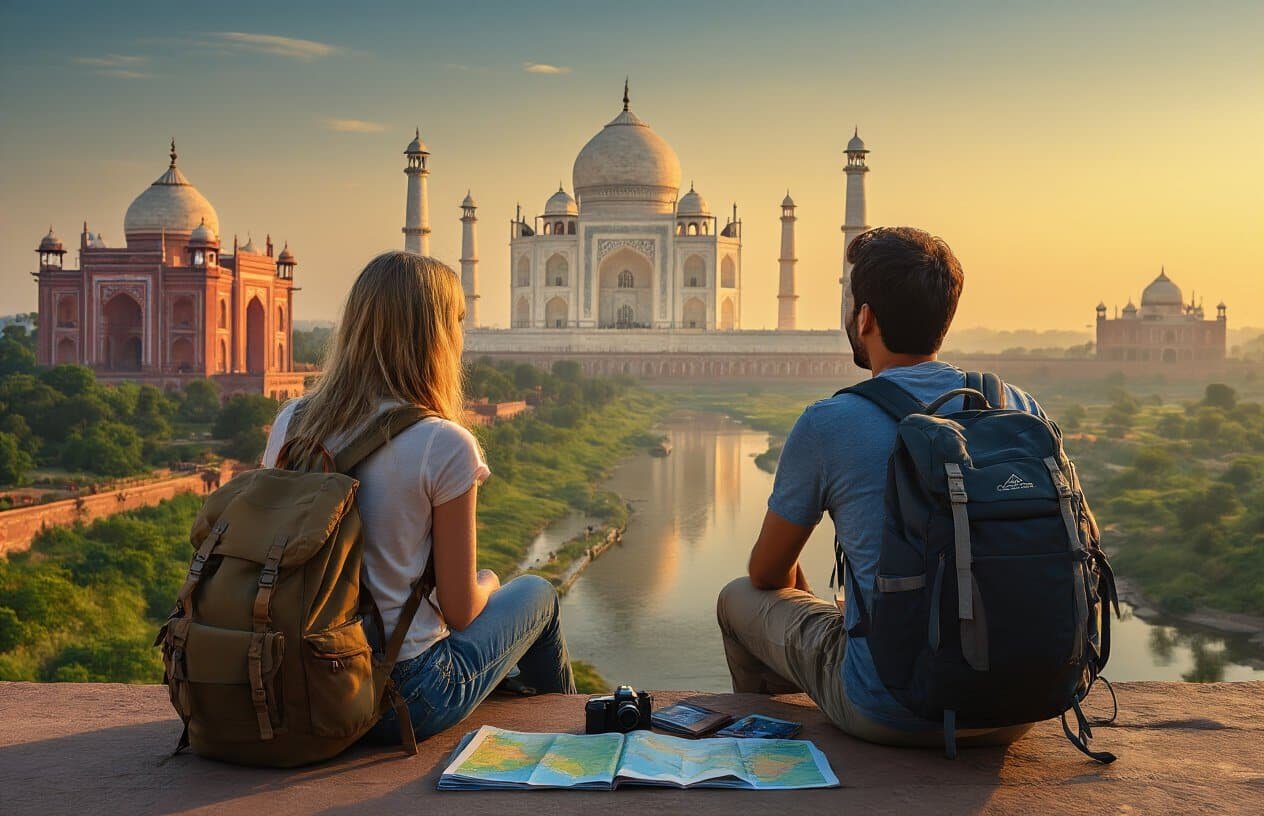
India is a country that will challenge your expectations and reward your adventurous spirit. From the spiritual ghats of Varanasi to the desert landscapes of Rajasthan, from the bustling streets of Delhi to the tranquil backwaters of Kerala, every destination offers something extraordinary. With proper planning – securing your e-visa, understanding the currency, and preparing for the climate – you’ll be ready to navigate this incredible country with confidence.
Remember to embrace the chaos that makes India so uniquely captivating. Start slow, stay flexible with your itinerary, and don’t let the fear of Delhi belly keep you from experiencing the amazing local cuisine. Whether you’re traveling on a shoestring budget or looking for luxury experiences, India accommodates every type of traveler. Pack your sense of adventure, bring your camera, and prepare for a journey that will leave lasting impressions long after you return home. India isn’t just a destination – it’s a transformative experience waiting to unfold.
Frequently Asked Questions on Travel to India
Frequently Asked Questions (FAQ) about Traveling to India in 2025
Do I need a visa to travel to India in 2025?
Yes, most foreign travelers require a visa. The e-Visa is the easiest option for tourism, business, or medical. Always apply via the official government portal.
What is the best time to visit India in 2025?
Generally October–March for pleasant weather. Summer (Apr–Jun) is hot; Monsoon (Jul–Sep) brings heavy rains. Pick regions based on season.
Is India safe for solo travelers, especially women?
Yes—millions travel safely. Stick to busy areas, avoid late-night travel in unfamiliar places, and dress modestly in rural/holy sites. Women-only taxis/hostels exist in many cities.
How much does a trip to India cost in 2025?
Backpackers: ~$25–40/day; Mid-range: ~$60–120/day; Luxury: $200+/day. Costs vary by city, season, and activities.
What are must-visit destinations in India?
Delhi, Agra (Taj Mahal), Jaipur, Kerala backwaters, Goa, Varanasi, Himachal, and Ladakh—each offers unique culture and landscapes.
What are some common scams to avoid in India?
Beware fake guides, unmetered taxis, and unsolicited “help”. Pre-book tours, check reviews, and use trusted apps like Ola/Uber.
What is the local transportation like?
Extensive rail, budget airlines, city metros, and ride-hailing apps. Trains/buses are affordable; flights save time for long distances.
Can I use credit cards and ATMs easily?
Yes in cities/hotspots. Always carry some INR cash for rural areas and small vendors.
Is travel insurance necessary?
Highly recommended—for medical emergencies, lost baggage, delays, and cancellations.
What should I pack for a trip to India?
Light cottons for heat, warm layers for northern winters, comfy shoes, sunscreen, reusable bottle, and modest outfits for temples.
Do I need vaccinations before traveling?
Be up to date on routine vaccines. Depending on itinerary, Hep A, Typhoid, and Japanese Encephalitis may be advised—consult your doctor.
What is the local currency and how to exchange?
Indian Rupee (INR). Exchange at airports/banks/authorized counters; ATMs are widely available in cities.
Can I use my mobile phone and internet?
Yes. Local SIMs (Airtel, Jio, Vi) are cheap with good data. Wi-Fi is common in hotels/cafés.
What food should I try?
Delhi chaat & butter chicken, South Indian dosas, Hyderabadi biryani, Kerala fish curry, and sweets like gulab jamun. Choose hygienic places.
Is English widely spoken?
Yes in cities, airports, hotels, and tourist areas. Basic English may be limited in rural regions; a few Hindi phrases help.
Can I drink tap water?
No. Stick to sealed bottled or filtered water. A purifier bottle is a good eco-friendly option.
Are trains safe in India?
Yes. Book via IRCTC/official apps; choose AC classes for comfort/security. Keep valuables secure in crowds.
How do I get around major cities?
Use metros (Delhi, Mumbai, Bengaluru, Kolkata), Ola/Uber, auto-rickshaws, or prepaid taxis.
Can I use USD or EUR directly?
No. Convert to INR before spending; foreign currency isn’t accepted at shops.
What are temple/holy site etiquette tips?
Dress modestly, remove shoes, ask before photos, avoid public displays of affection, and respect separate queues or areas where applicable.